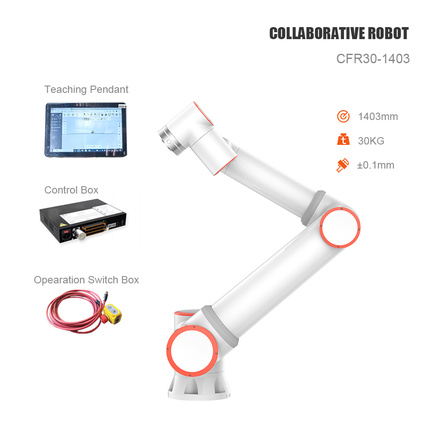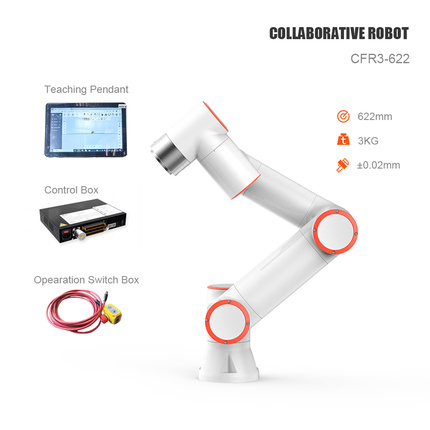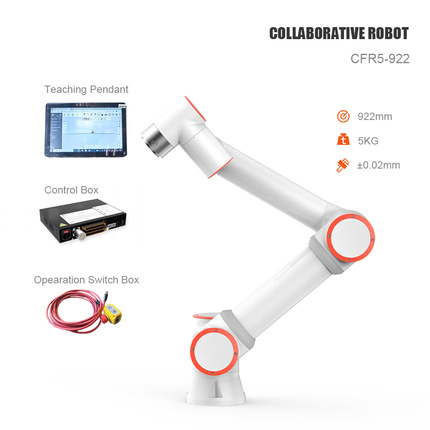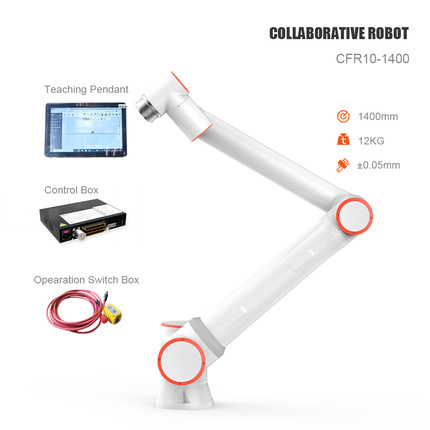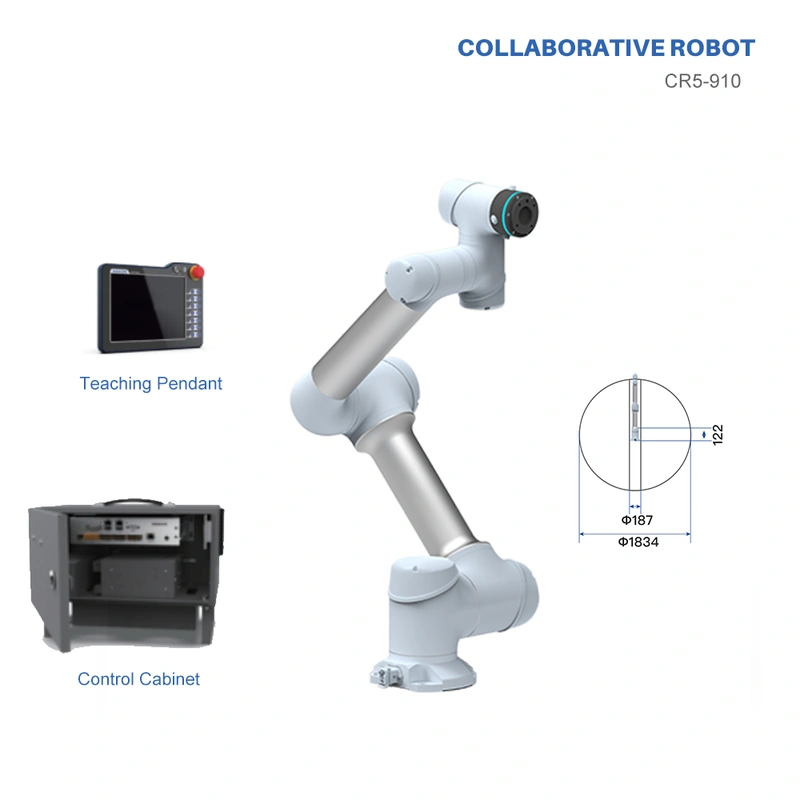


















협업 로봇은 공유 작업 공간 내에서 인간과 직접적이고 근접한 상호 작용을 하도록 특별히 설계되었습니다. 이는 기존 산업용 로봇과의 근본적인 차이점입니다. 기존 산업용 로봇은 안전을 확보하기 위해 일반적으로 안전 펜스 뒤에 물리적으로 격리되어야 하는 반면, 협업 로봇은 물리적 장벽 없이 인간 작업자와 나란히 작업할 수 있습니다.

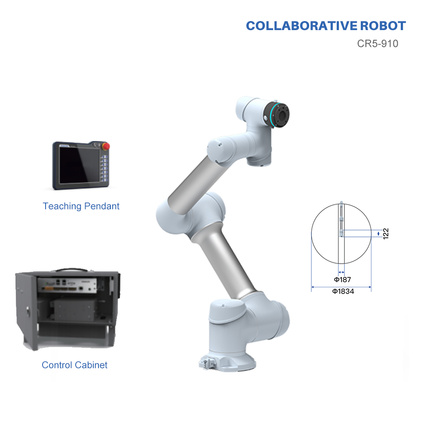
| 이름 | CR 시리즈 협동 로봇 | ||
| 사양 | 모델 | CR5-910 | |
| 유효 탑재량 | 5kg | ||
| 도달하다 | 917mm | ||
| 자유도 | 6개의 회전 관절 | ||
| HMI | 10.4인치 티칭 펜던트 또는 모바일 단말기 웹 앱 | ||
| 움직임 | 반복성 | ±0.02mm | |
| 축 이동 | 작동 범위 | 최대 속도 | |
| 1축 | ±360° | ±225°/s | |
| 2축 | ±360° | ±225°/s | |
| 3축 | ±360° | ±225°/s | |
| 4축 | ±360° | ±225°/s | |
| 5축 | ±360° | ±225°/s | |
| 6축 | ±360° | ±225°/s | |
| 최대 TCP 속도 | 3.6m/s | ||
| 최대 직선 속도 | 1.5m/s | ||
| 특징 | IP 분류 | IP54/IP65 | |
| 도구 인터페이스 | GB/T 14468.1-50-4-M6(ISO 9409-1과 동일) | ||
| 전원 공급 장치 | 220-240VAC 47-63Hz 10A / 100-200VAC 47-63Hz 16A | ||
| 입출력 포트 | 디지털 입출력 2개, 24V, 0.6A | ||
| 보관 온도 범위 | -40℃~55℃ | ||
| 로봇 크기 | 1100x330x220mm | ||
| 기계 무게 | 22kg | ||
| 전력 소비량 | 일반적인 전력 소비량은 200W입니다. | ||
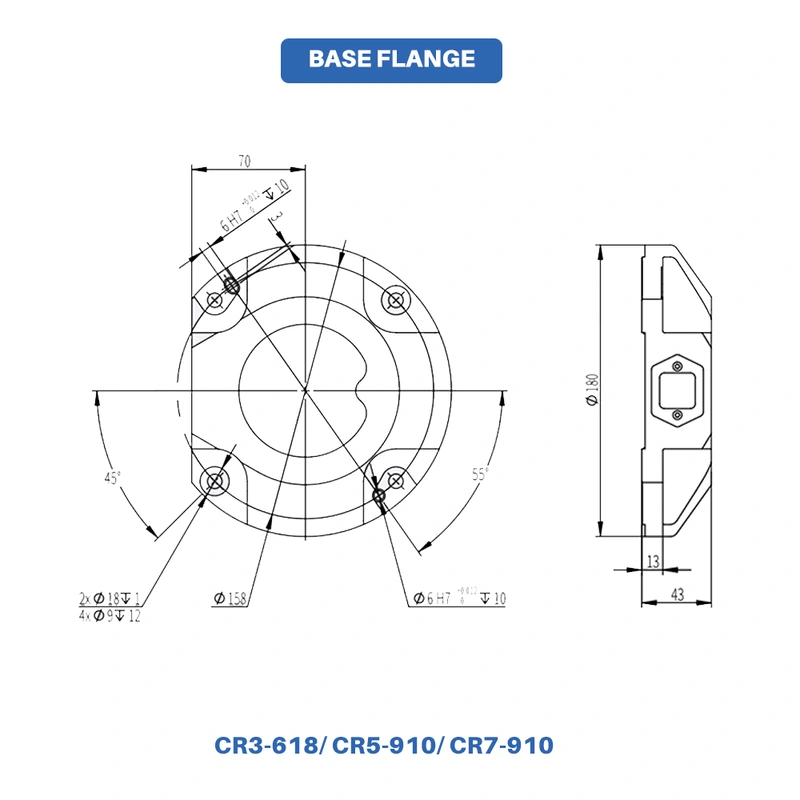
| 설치 | 지면 설치형, 역방향 설치형, 캔틸레버형. 모든 방향으로 설치 가능 | ||
| 제어 캐비닛 | 전원 입력 | 200-240VAC, 47-63Hz, 10A 100-200VAC, 47-63Hz, 16A | |
| 정격 출력 전력 | 48V@600W | ||
| 무게 | 13.6kg | ||
| 작동 온도 범위 | -10~50℃ | ||
| 보관 온도 범위 | -40~55℃ | ||
| 작업 습도 | 습도 20~70% | ||
| 보관 습도 | 10%-95% (비응축) | ||
| 공기압 | 70-106kPa | ||
| IP 분류 | IP44 | ||
| 소음 | ≤55db | ||
| 통신 인터페이스 | CAN, RS485, LAN, EtherCAT, INC 인코더 신호: A+, A-; B+, B-; Z+, Z- | ||
| 사용자 인터페이스 | 16채널 DI(PNP 타입, L: -3V~5V, H: 11V~30VDC, 2~15mA), 16채널 DO(PNP 타입, 22~28V, 최대: 0.5A) | ||
| 제어 상자 | 화면 크기 | 10.4인치 | |
| 화면 해상도 | 800*600/60Hz | ||
| 터치스크린 타입 | 정전 용량 | ||
| 작동 온도 범위 | 0℃~50℃ | ||
| 작동 습도 범위 | 습도 10~90% (비응축) | ||
| 보호 등급 | IP54 | ||
| 치수 | 295*225*45 (손잡이 제외) | ||
| 무게 | 1.3kg | ||

a. 동력 및 힘 제한: 내장된 토크 센서가 각 관절의 토크를 실시간으로 모니터링하여 충돌력 임계값을 인체의 생체역학적 허용 한계 이하로 설정할 수 있습니다.
b. 안전 등급 모니터링 정지: 통합 안전 I/O 연동 기능을 갖추고 있습니다.
c. 속도 및 간격 모니터링: 안전 PLC를 통해 동작 속도를 실시간으로 조정할 수 있습니다.
d. 반복성: ±0.02 mm
e. Collaborative robots are ideally suited for flexible manufacturing environments characterized by high-mix, variable-batch production—such as laser marking of medical devices, precision assembly, and optical inspection. While maintaining industrial-grade repeatability, they provide a collaborative workspace between humans and machines that is unattainable with traditional robotic systems.
The application value of collaborative robots stems from their three key technical features: force control perception, visual guidance, and flexible deployment. Below, we analyze four core application directions from the perspective of technical implementation.
1. Precise Assembly and Force Control Insertion
In traditional rigid assembly, positional deviations can lead to jamming or damage to the workpiece. Collaborative robots adopt a torque control mode, allowing the end to promptly sense contact force and actively adapt. A typical application is the insertion of electronic connectors: The robot initially applies a force of 0.5N to search for the hole position. Upon detecting a sudden change in force, it automatically adjusts its posture to achieve a precise insertion with a gap of 0.1mm, resulting in a yield rate of up to 99.9%.
II. Adaptive Grinding and Polishing
The workpiece blank has a ±1mm dimensional tolerance. Traditional position control robots are difficult to adapt to this. Collaborative robots use a force/position hybrid control method to maintain a constant contact force between the end tool and the workpiece surface (with an accuracy of ±0.5N), automatically compensating for trajectory deviations. It is suitable for surface treatment of automotive parts, bathroom hardware, and other products.
III. Machine Vision Guided Grasping
The collaborative robot equipped with 2D/3D cameras achieves visual servoing through hand-eye calibration. A typical application is the sorting of scattered and stacked workpieces: the deep learning model identifies the position and orientation of the workpieces, and the robot plans the grasping trajectory in real time. No precise positioning of the tray is required. During production changeovers, only the visual model needs to be switched, and the programming time is compressed from several hours to minutes.
IV. Mobile Collaborative Composite Robot
The collaborative arm is mounted on the AMR chassis to form an integrated "hand-eye-foot" system. It is suitable for cross-workstation material handling and operation scenarios, such as in a machining production line: The AMR moves to the lathe, the mechanical arm grabs the blank and feeds it into the spindle, and after completion, the finished product is taken out and sent to the inspection station. Communication is achieved through 5G + OPC UA, with millisecond-level collaboration.
위의 네 가지 방향은 협동 로봇이 "고정된 작업대에서의 반복적인 작업"에서 "환경 적응성과 다양한 작업"으로 진화하는 경로를 나타냅니다.