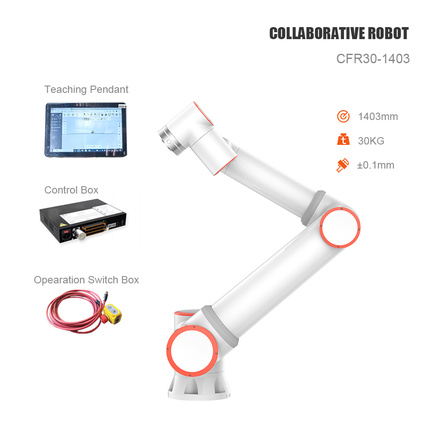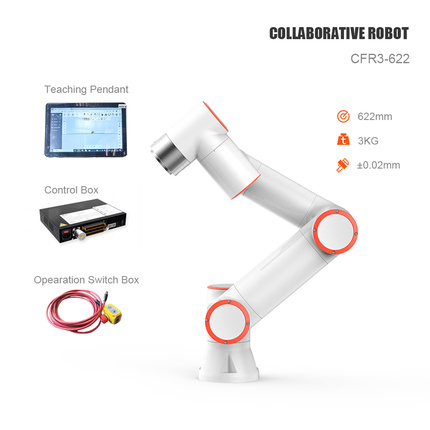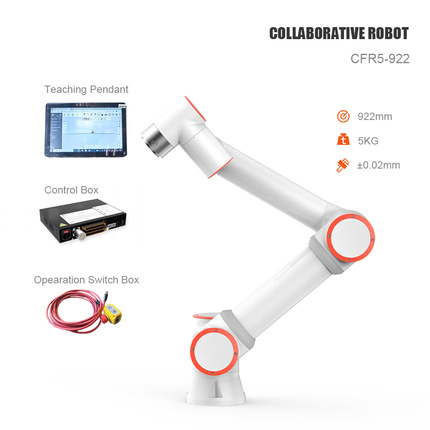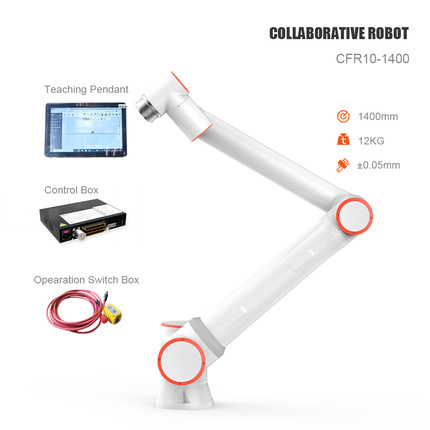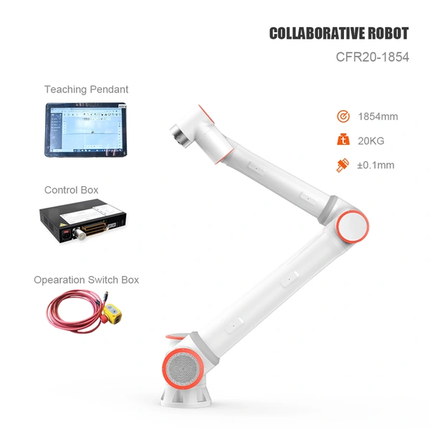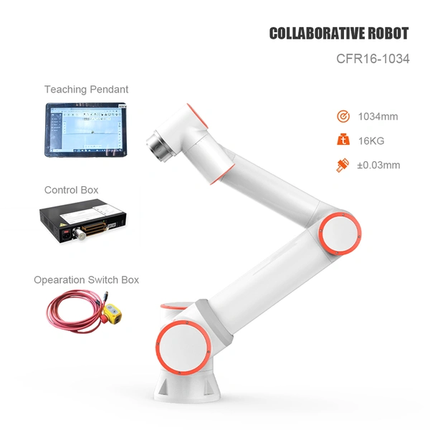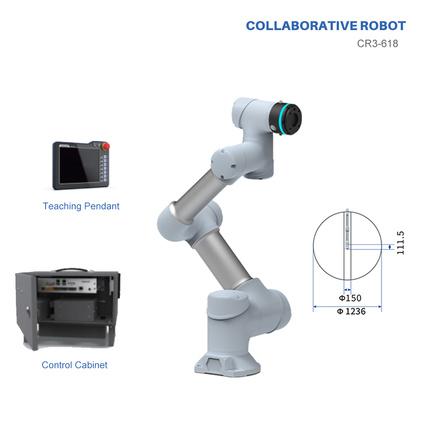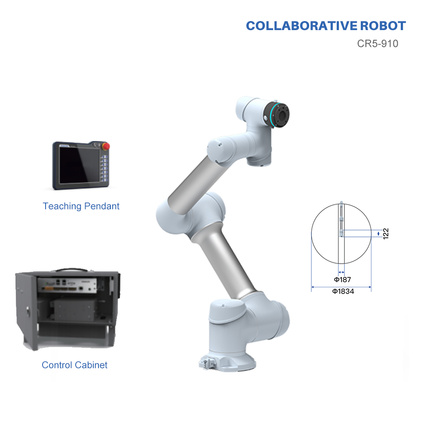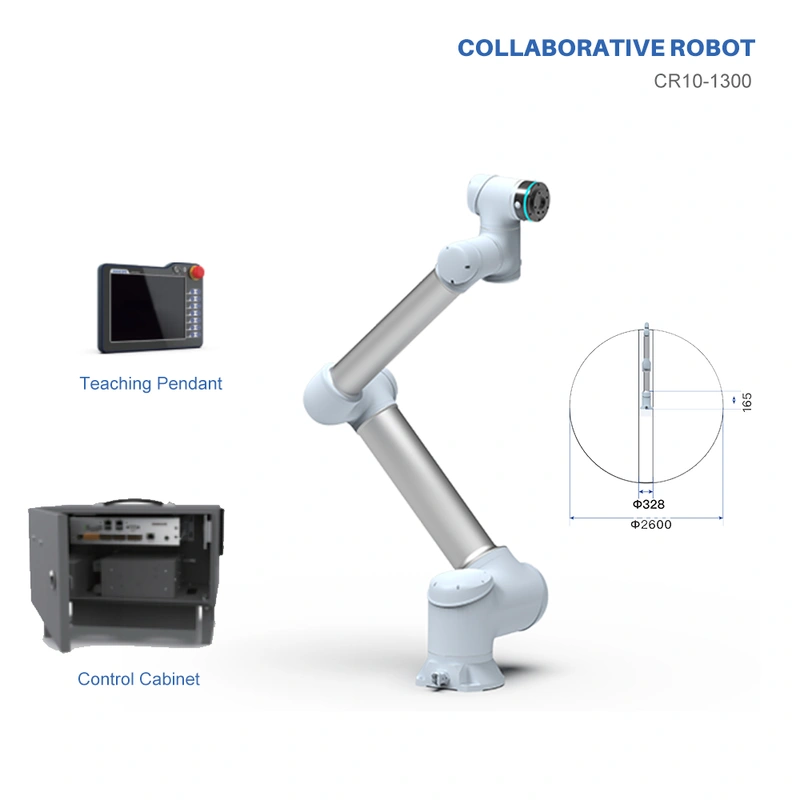


















협동 로봇과 기존 산업용 로봇의 근본적인 차이점은 외형이나 적재 용량뿐만 아니라 기본 제어 아키텍처에 있습니다. 협동 로봇은 힘/토크 제어 루프를 사용하여 인간과 로봇이 공존하는 환경에서 본질적인 안전성을 확보합니다.

| 이름 | CR 시리즈 협동 로봇 | ||
| 사양 | 모델 | CR10-1300 | |
| 유효 탑재량 | 10kg | ||
| 도달하다 | 1300mm | ||
| 자유도 | 6개의 회전 관절 | ||
| HMI | 10.4인치 티칭 펜던트 또는 모바일 단말기 웹 앱 | ||
| 움직임 | 반복성 | ±0.03mm | |
| 축 이동 | 작동 범위 | 최대 속도 | |
| 1축 | ±360° | ±180°/s | |
| 2축 | ±360° | ±180°/s | |
| 3축 | ±360° | ±225°/s | |
| 4축 | ±360° | ±225°/s | |
| 5축 | ±360° | ±225°/s | |
| 6축 | ±360° | ±225°/s | |
| 최대 TCP 속도 | 3.8m/s | ||
| 최대 직선 속도 | 1.5m/s | ||
| 특징 | IP 분류 | IP54/IP65 | |
| 도구 인터페이스 | GB/T 14468.1-50-4-M6(ISO 9409-1과 동일) | ||
| 전원 공급 장치 | 220-240VAC 47-63Hz 10A / 100-200VAC 47-63Hz 16A | ||
| 입출력 포트 | 디지털 입출력 2개, 24V, 0.6A | ||
| 보관 온도 범위 | -40℃~55℃ | ||
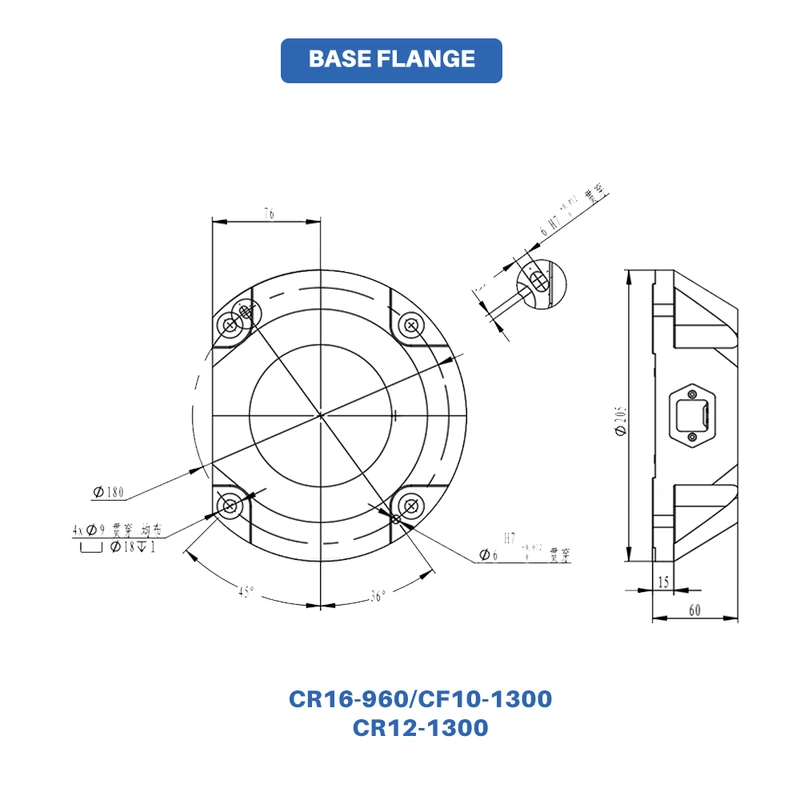
| 로봇 크기 | 1512x388x205mm | ||
| 기계 무게 | 38kg | ||
| 전력 소비량 | 일반적인 소비 전력 500W | ||
| 설치 | 지면 설치형, 역방향 설치형, 캔틸레버형. 모든 방향으로 설치 가능 | ||
| 제어 캐비닛 | 전원 입력 | 200-240VAC, 47-63Hz, 10A 100-200VAC, 47-63Hz, 16A | |
| 정격 출력 전력 | 48V@600W | ||
| 무게 | 13.6kg | ||
| 작동 온도 범위 | -10~50℃ | ||
| 보관 온도 범위 | -40~55℃ | ||
| 작업 습도 | 습도 20~70% | ||
| 보관 습도 | 10%-95% (비응축) | ||
| 공기압 | 70-106kPa | ||
| IP 분류 | IP44 | ||
| 소음 | ≤55db | ||
| 통신 인터페이스 | CAN, RS485, LAN, EtherCAT, INC 인코더 신호: A+, A-; B+, B-; Z+, Z- | ||
| 사용자 인터페이스 | 16-channel DI (PNP type, L: -3V~5V, H: 11V-30VDC, 2~15mA), 16-channel DO (PNP type, 22~28V, Max: 0.5A) | ||
| Control Box | Screen Size | 10.4 inches | |
| Screen Resolution | 800*600/60Hz | ||
| Touchscreen Type | Capacitive | ||
| Operating Temperature Range | 0℃~50℃ | ||
| Operating Humidity Range | 10~90%RH (non-condensing) | ||
| Protection Rating | IP54 | ||
| Dimensions | 295*225*45 (excluding grip) | ||
| Weight | 1.3kg | ||

a. Power and Force Limiting: Built-in torque sensors monitor the torque at each joint in real time, allowing collision force thresholds to be configured below the biomechanical tolerance limits of the human body.
b. Safety-Rated Monitored Stop: Features integrated safety I/O interlocking capabilities.
c. Speed and Separation Monitoring: Enables real-time adjustment of motion speed via a safety PLC.
d. Repeatability: ±0.02 mm
e. Collaborative robots are ideally suited for flexible manufacturing environments characterized by high-mix, variable-batch production—such as laser marking of medical devices, precision assembly, and optical inspection. While maintaining industrial-grade repeatability, they provide a collaborative workspace between humans and machines that is unattainable with traditional robotic systems.
The application value of collaborative robots is based on three major technical pillars: torque control, visual guidance, and flexible deployment. Below, we will comprehensively analyze their application directions from a technical perspective.
I. Precision Assembly and Force Control Technology
Traditional rigid assembly has extremely high requirements for positional accuracy. Even a slight deviation can lead to damage. Collaborative robots adopt a force/position hybrid control method, where the end effector can immediately sense the contact force and actively adapt to it. Typical applications include insertion of electronic connectors and bearing press-fitting. The force control accuracy can reach ±0.5N, and the gap tolerance has been relaxed from 0.01mm to 0.1mm, significantly reducing the requirements for the positioning accuracy of the front end.
II. Surface Treatment and Adaptive Grinding
The workpiece blank has a ±1mm dimensional tolerance, which is difficult for traditional position control robots to handle. The collaborative robot maintains a constant contact force between the tool and the workpiece surface through constant force control, automatically compensates for trajectory deviations, and is suitable for scenarios such as grinding of car bumpers, polishing of bathroom hardware, and sanding of wood products.
III. Machine Vision Guidance and Zero-Teaching Grasping
2D/3D 카메라를 장착한 협동 로봇은 핸드아이 캘리브레이션을 통해 시각 서보 제어를 구현합니다. 딥러닝 모델은 흩어져 있거나 쌓여 있는 작업물의 자세를 식별하고 실시간으로 파지 궤적을 계획할 수 있습니다. 제품 교체 시 시각 모델만 전환하면 되므로 프로그래밍 시간을 몇 시간에서 몇 분으로 단축할 수 있습니다. 또한 제품 외관 검사, 크기 측정, OCR 문자 인식과 같은 품질 관리 작업에도 활용할 수 있습니다.
IV. 이동형 협업 복합 로봇
협동 로봇 팔은 AMR 섀시에 장착되어 통합된 "손-눈-발" 시스템을 구성합니다. 이는 자동 가공 라인과 같은 여러 작업 스테이션 간의 자재 처리 및 작업 시나리오에 적합합니다. 예를 들어, AMR이 CNC 기계로 이동하면 로봇 팔이 재료를 잡아 스핀들에 공급하고, 가공이 완료되면 완성품을 꺼내 검사 스테이션으로 보냅니다. 통신은 5G + OPC UA를 사용하여 밀리초 단위의 협업을 구현합니다.
V. 레이저 가공 및 적층 제조의 후처리
협동 로봇은 레이저 장비와 연동하여 절단, 용접, 마킹 및 세척 작업을 수행합니다. 의료기기 분야에서는 고정밀 협동 로봇이 UDI 코드 레이저 마킹에 사용되며, 3D 프린팅 후처리에서는 서포트 제거 및 표면 마감 작업에 활용됩니다.
VI. 팔레타이징, 언팔레타이징 및 포장
협동 로봇은 다양한 물류 창고 및 생산 라인 최종 단계에서 팔레트 적재 및 하역 작업에 적합합니다. 크기가 다른 상자를 자동으로 식별하고 미리 설정된 패턴에 따라 적재할 수 있어, 수작업으로 무거운 물건을 들어 올리는 작업을 대체하고 작업장 부상 위험을 줄여줍니다.
협동 로봇의 기술 발전 경로는 "고정된 위치에서의 반복적인 동작"에서 "환경 적응성 및 다양한 작업"으로 진화하면서 다양한 응용 시나리오에 대응할 수 있게 되었고, 큰 편의성을 제공하고 있습니다.