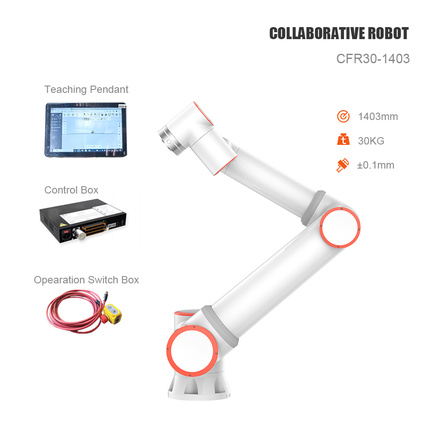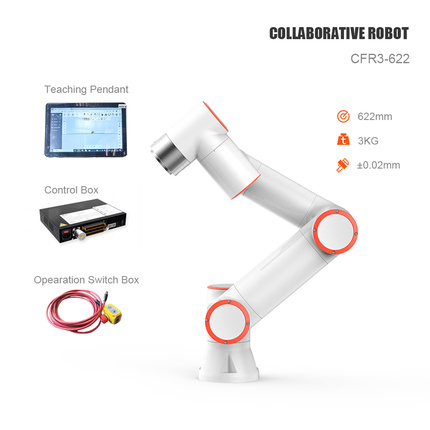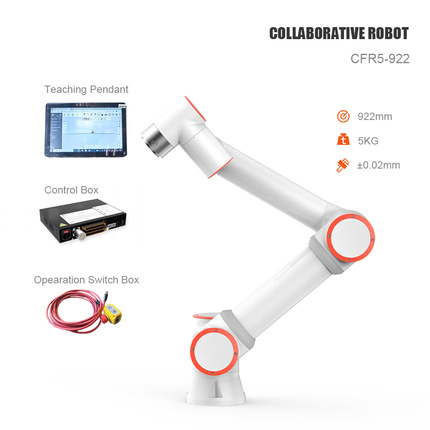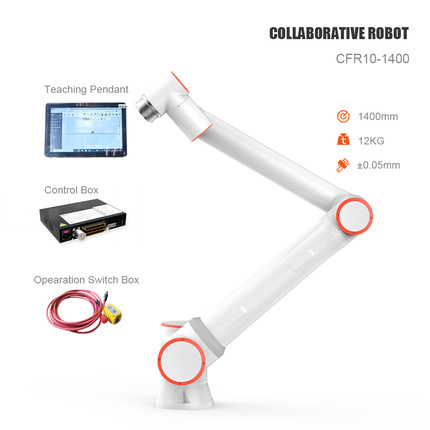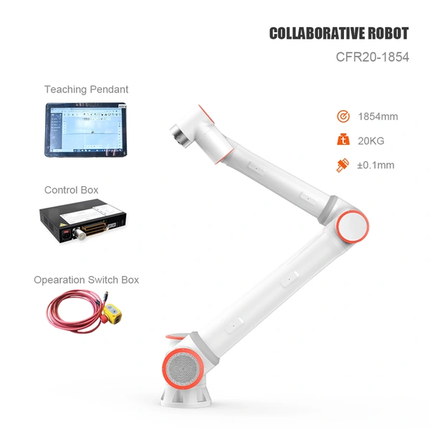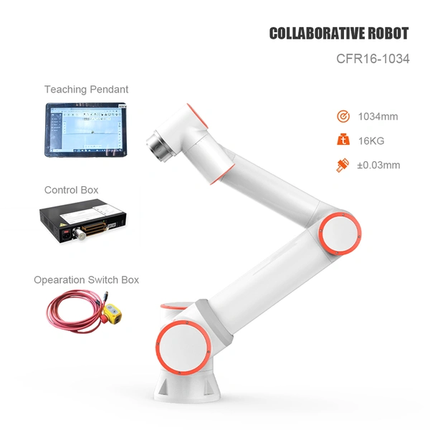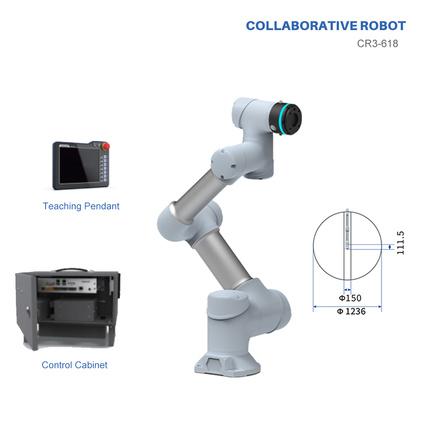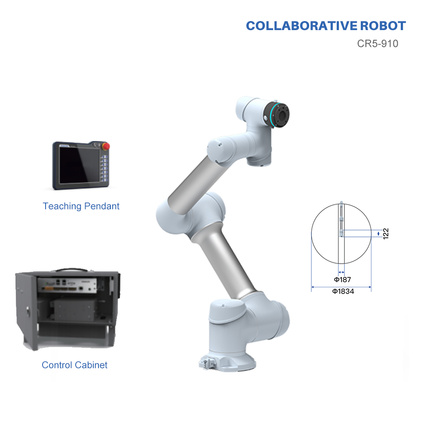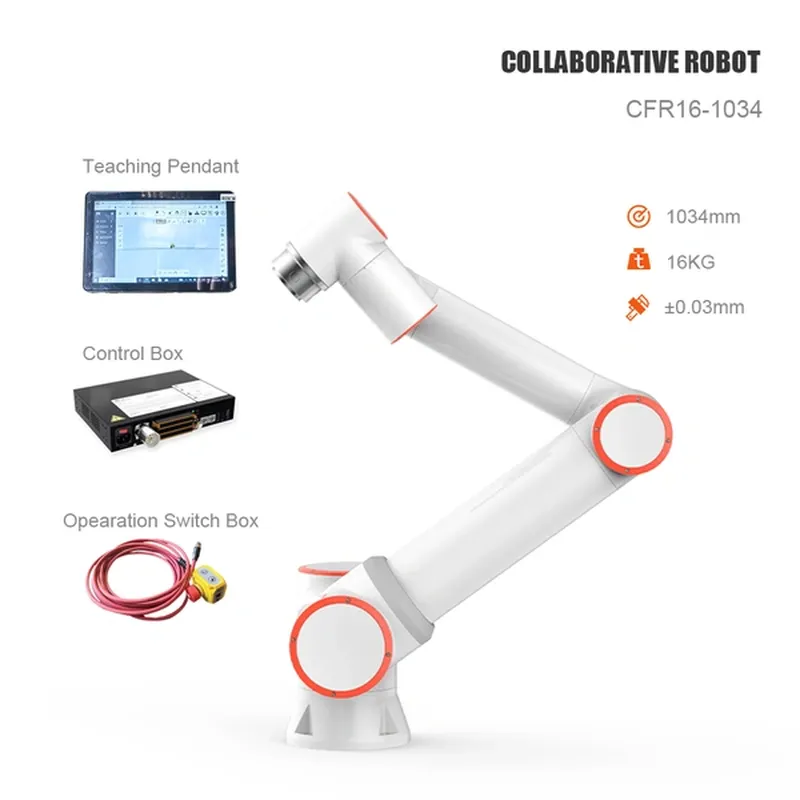















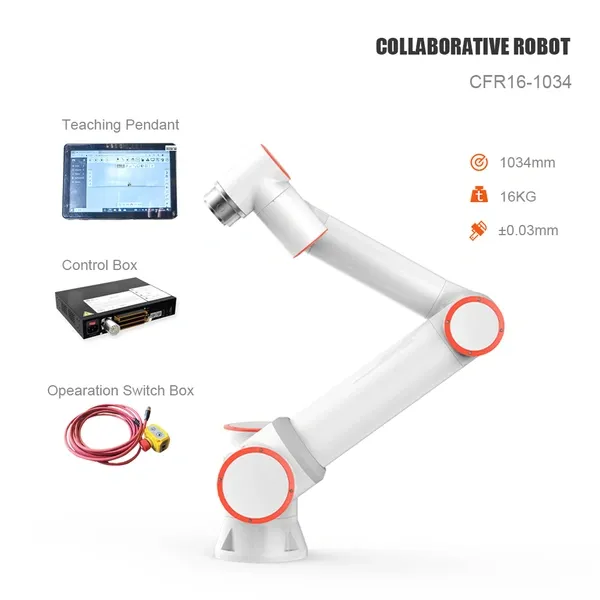

الروبوت التعاوني هو جهاز روبوتي ذكي مصمم خصيصًا للعمل بأمان مع البشر في نفس مكان العمل. على عكس الروبوتات الصناعية التقليدية التي تتطلب عزلًا ماديًا بحواجز أمان، فإن الروبوتات التعاونية، المزودة بمستشعرات قوة مدمجة، ونظام كشف التصادم، وتصميم خفيف الوزن، يمكنها العمل جنبًا إلى جنب مع العمال دون الحاجة إلى فصل مادي.

| اسم | روبوت تعاوني ذكي | ||
| مواصفة | نموذج | CFR16-1034 | |
| الحمولة | 16 كجم | ||
| يصل | 1034 ملم | ||
| درجات الحرية | 6 مفاصل دوارة | ||
| واجهة المستخدم الرسومية | وحدة تحكم تعليمية مقاس 10.1 بوصة أو تطبيق ويب طرفي للهواتف المحمولة | ||
| حركة | قابلية التكرار | ±0.03 مم | |
| قابلية تكرار الوضعية وفقًا لمعيار ISO 9283 | ±0.03 مم | ||
| حركة المحور | نطاق العمل | أقصى سرعة | |
| محور واحد | ±175° | ±120 درجة/ثانية | |
| محورين | 85°/265° | ±120 درجة/ثانية | |
| 3 محاور | ±160° | ±180 درجة/ثانية | |
| 4 محاور | 85°/265° | ±180 درجة/ثانية | |
| 5 محاور | ±175° | ±180 درجة/ثانية | |
| 6 محاور | ±175° | ±180 درجة/ثانية | |
| سرعة TCP النموذجية | 1 م/ث | ||
| سمات | تصنيف IP | IP54 (IP65 اختياري) | |
| ضوضاء | <65 ديسيبل | ||
| تركيب الروبوت | أي اتجاه | ||
| منافذ الإدخال/الإخراج | مدخل رقمي (DI) 2، مخرج رقمي (DO) 2، مدخل تناظري (AI) 2، مخرج تناظري (AO) 2، مدخل نبضات عالي السرعة 2 | ||
| مزود طاقة الإدخال/الإخراج للأداة | 24 فولت / 1.5 أمبير | ||
| بدني | بصمة أرضية | 190 مم | |
| وزن | 40 كجم (الوزن بدون سلك) | ||
| درجة حرارة التشغيل | 0-45 درجة مئوية | ||
| رطوبة التشغيل | 90% رطوبة نسبية (بدون تكثيف) | ||
| مواد | الألومنيوم والفولاذ | ||
| متوسط القدرة | 310 واط | ||
| صندوق التحكم | الاتصالات القياسية | الإدخال/الإخراج، TCP/IP، Modbus_TCP/RTU | |
| اتصال اختياري | CC-Link، Profinet، Ethernet/IP، EtherCAT | ||
| مجموعة أدوات تطوير البرمجيات | C#/C++/Python/ROS/ROS2 | ||
| الطول × العرض × الارتفاع | 245 × 180 × 44.5 مم | ||
| وزن | 2.1 كجم | ||
| مواد | صفيحة مجلفنة | ||
| مزود الطاقة | 30-60 فولت تيار مستمر | ||
| لغة الآلة | الإنجليزية، الصينية، الروسية، الكورية، اليابانية، الفرنسية، وغيرها. يدعم النظام التخصيص. | ||

تم تصميم الروبوت التعاوني ذو المحاور الستة خصيصًا للتعامل مع الأجزاء الصغيرة والتجميع والتقاطها ووضعها وما إلى ذلك. يمكن لهذا الروبوت التعاوني الحفاظ على السلامة أثناء العمل مع المشغلين بفضل مستشعرات عزم الدوران والسلامة المدمجة فيه.
تبلغ قدرة التحميل 3 كيلوغرامات، وقد صُممت لتكون خفيفة الوزن، مما يجعلها مثالية لتجميع الإلكترونيات، وفرز الأجزاء الصغيرة، وتشغيل الآلات الخفيفة، وفحص الجودة، من بين مهام أخرى.
لماذا تختار هذا الروبوت التعاوني؟
1. التعاون الآمن بين الإنسان والآلةيمكن لأجهزة الاستشعار الأمنية المدمجة اكتشاف حالات التلامس وإيقاف الذراع الروبوتية على الفور.
لا حاجة لحواجز أمان - مما يوفر مساحة أرضية المصنع وتكاليف التركيب
يتوافق مع معايير السلامة ISO 10218
2. سهل الاستخدام للغايةDrag-and-drop teaching programming: hold the arm and guide it to complete the action
No programming background required - an employee can learn to operate it in less than an hour.
A graphical interface is provided to handle more complex sequences.
3. Lightweight and portableWeighs only [15 kilograms] - one person can carry and re-deploy it
No special foundation or heavy installation fixtures required
Can move work positions between various work areas according to production demand changes
4. Precision requirements for small parts±0.02 millimeters of repeatability error ensures precise placement of tiny components.
The six-axis freedom allows for any-angle operation - perfect for use in narrow spaces
5. Quick return on investmentReplace repetitive manual work with automation technology
7X24 hours operation capability
Typical investment payback period: 6 to 12 months

Collaborative robots are widely used in precise assembly and screw fastening, especially in the 3C electronics and automotive parts industries. With a high-precision force control system, collaborative robots can achieve accurate torque control during screw fastening and flexible wiring cable insertion, avoiding product damage caused by improper force. In automotive parts assembly, flexible mechanical arms can flexibly adapt to the assembly requirements of different model components, effectively improving production efficiency and assembly quality.
2. WeldingCollaborative robots are rapidly penetrating industries with high demands for flexible welding, such as steel structures and ships. Through dragging teaching and graphical programming, collaborative robots can quickly switch welding parameters and process paths, solving the problems of complex debugging and high costs in traditional welding equipment in small batch production. UJIAN Technology's "Steel Tailor" intelligent welding robot can autonomously identify weld seams, plan paths, and adjust parameters in real time.
3. PalletizingThe growth of the palletizing application market is mainly driven by the two major industries of food and beverage and chemical products. The post-packaging process of small and medium-sized food and beverage and daily chemical enterprises mostly still uses manual handling, resulting in low efficiency and rising labor costs. Collaborative palletizing robots have better solved these problems, achieving automated flexible palletizing, and the market is growing rapidly.
4. Material Handling and Loading and UnloadingCollaborative robots can cooperate with CNC machines, injection molding machines, etc., to achieve automated loading and unloading, reducing the labor intensity of manual work. In the electronics production line, collaborative robots can save waiting time at workstations by using dual gripper positions and improve production efficiency. For example, after a collaborative robot grabs a component from secondary injection molding, it is sent to the cutting board and automatically cycles, requiring only one operator per shift, and the production capacity can be increased by three times.
5. Inspection and Quality MonitoringCombined with machine vision technology, collaborative robots can perform product appearance inspection, size measurement, etc., improving the quality control level. In PCB circuit board inspection, collaborative robots are equipped with structured light systems to accurately detect micro cracks, bent pins, etc., and record each inspection data to achieve quality traceability.
6. Grinding and PolishingCollaborative robots, with their flexible deployment and human-machine collaboration characteristics, are gradually overcoming the pain points of low efficiency and large dust hazards in traditional grinding operations. In fine grinding of 3C product appearance parts and surface treatment of automotive parts in specific scenarios, their application potential is huge.
7. PaintingWith the launch of explosion-proof collaborative robots, the application of collaborative robots has gradually expanded to painting work in high-temperature and high-risk environments, and its recognition in the painting field has increased due to its high sealing and dust-proof characteristics.
Non-Industrial Applications1. Medical and Laboratory AutomationSurgical assistance: Collaborative robots can assist doctors in performing minimally invasive surgeries, improving operation stability and accuracy.
Rehabilitation training: In rehabilitation medicine, collaborative robots can help patients perform limb movement training to promote functional recovery.
Laboratory automation: Collaborative robots can be used for sample sorting, tube transportation, and experimental operations, improving laboratory efficiency and reducing the risk of human contamination. In diagnostic laboratories, collaborative robots handle samples in clean rooms without rest, contamination, or errors.
2. Logistics and WarehousingWarehouse handling: Collaborative robots can be combined with AGVs to achieve automatic handling and stacking of goods.
Order sorting and packaging: In e-commerce logistics centers, collaborative robots can quickly identify and sort goods and complete automated packaging. For example, Vention's collaborative robots can fold 5-7 boxes per minute, accurately completing the packing.
3. Catering and Retailمحطة عمل القهوة الذكية: مزودة بنظام تحكم آلي موحد، لا يمكنها فقط أداء إجراءات صنع القهوة العامة ولكن أيضًا تخصيص وقت الاستخلاص ونسبة رغوة الحليب وفقًا لتفضيلات المستخدم.
تحضير الطعام: يمكن استخدام الروبوتات التعاونية لتزيين الكيك وتغليف المواد الغذائية وما إلى ذلك. من وضع كريمة التزيين إلى لف السوشي، تُكمل الروبوتات التعاونية عملية التزيين والتغليف بدقة وفقًا لمعايير السلامة الغذائية.
4. خدمات الأعمالمحطة التدليك الذكية: من خلال وحدات النقل الميكانيكي القياسية ووحدات التغذية الراجعة للضغط، بالإضافة إلى بيانات نوع جسم المستخدم، فإنها توفر خطط تدليك مخصصة.
التوجيه وخدمة العملاء: تتمتع بعض الروبوتات التعاونية بوظائف التفاعل الصوتي والملاحة، والتي يمكن تطبيقها في مراكز التسوق والمطارات وما إلى ذلك لتقديم خدمات التوجيه والاستشارة.
5. الزراعةيمكن استخدام الروبوتات التعاونية في قطف الفاكهة والخضراوات وإدارة البيوت الزجاجية لتحسين مستوى أتمتة الإنتاج الزراعي.
6. الصناعات الناشئة الأخرىالطاقة: المساعدة في فحص وصيانة المعدات في البيئات الخطرة لضمان سلامة الأفراد.
التعليم: كأداة تعليمية، فهي تساعد الطلاب والباحثين على تعلم برمجة الروبوتات وتقنيات التطبيقات.