
















핵심 기술 원칙
YH 시리즈 핸들링 로봇의 작동은 네 가지 핵심 구성 요소의 협력적인 작업에 기반합니다.
1. 환경 인식 및 포지셔닝
- 레이저 레이더, 시각 센서, 초음파 센서를 포함한 다중 센서 융합 기술을 활용합니다.
- 레이저 SLAM 내비게이션은 ±10mm의 위치 오차를 달성할 수 있으며, 사전 설정된 비콘 없이 자율적으로 지도를 작성하고 내비게이션할 수 있습니다.
- 비주얼 SLAM 내비게이션은 카메라를 사용하여 환경적 특징을 식별하며, 비용이 비교적 저렴하고 안정적인 조명 환경에 적합합니다.
2. 모션 제어 시스템
- Light-load scenario (≤500kg): Utilizes differential drive or McNamee wheels, supporting flexible movements such as forward motion, lateral movement, and rotation, suitable for narrow passage operations.
- Heavy-load scenario (≥1 ton): Utilizes steering wheel drive + fork lifting mechanism, with a carrying capacity of up to 5 tons or more.
- Capable of operating in narrow passages.
3. Autonomous Path Planning
- Real-time calculation of the optimal transportation route, with response time less than 500ms.
- When multiple robots are operating in a cluster, the system automatically optimizes the path to avoid congestion.
- When encountering dynamic obstacles, it can autonomously decide to detour or wait instead of simply stopping.
4. Multi-sensor Fusion Obstacle Avoidance
- Equipped with 16-line laser radar (horizontal field of view 270°), ground distance detection device (0.1 - 3m), and collision sensor (trigger pressure threshold 0.5N).
- Through the trajectory compensation mechanism, the bottom camera captures ground features for real-time position calibration.

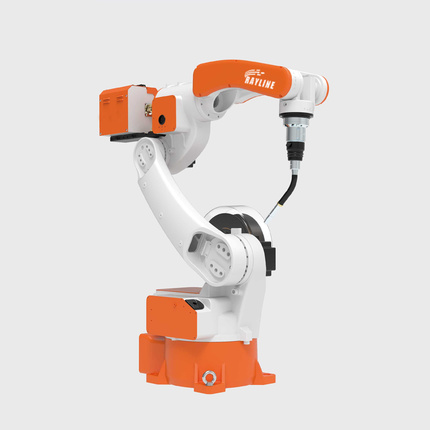
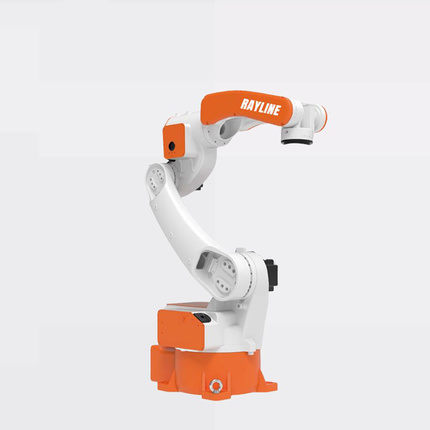
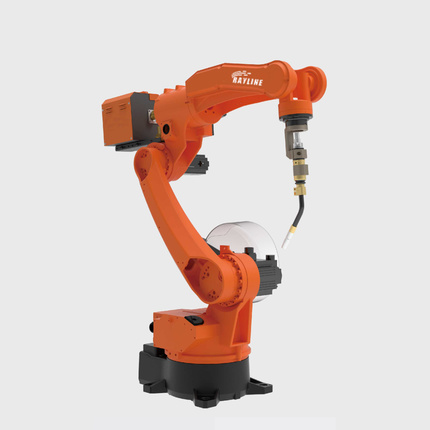
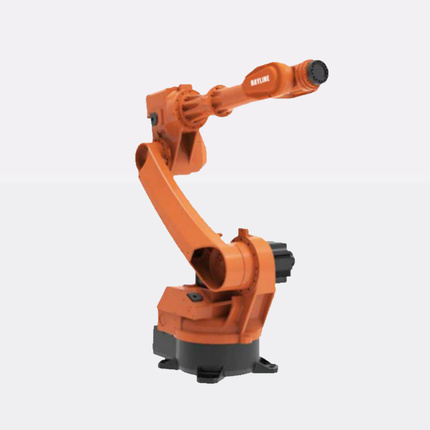
Composition of Industrial Robots
1. Mechanical body
These are the "bones" and "muscles" of the robot, the part that directly performs the action.
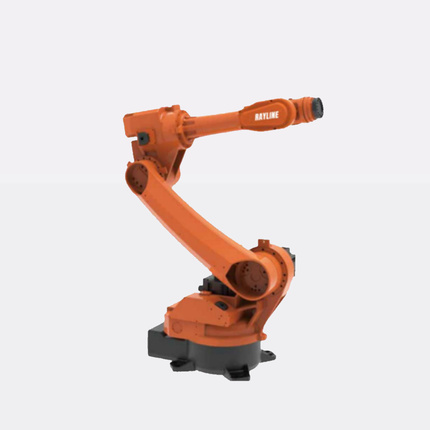
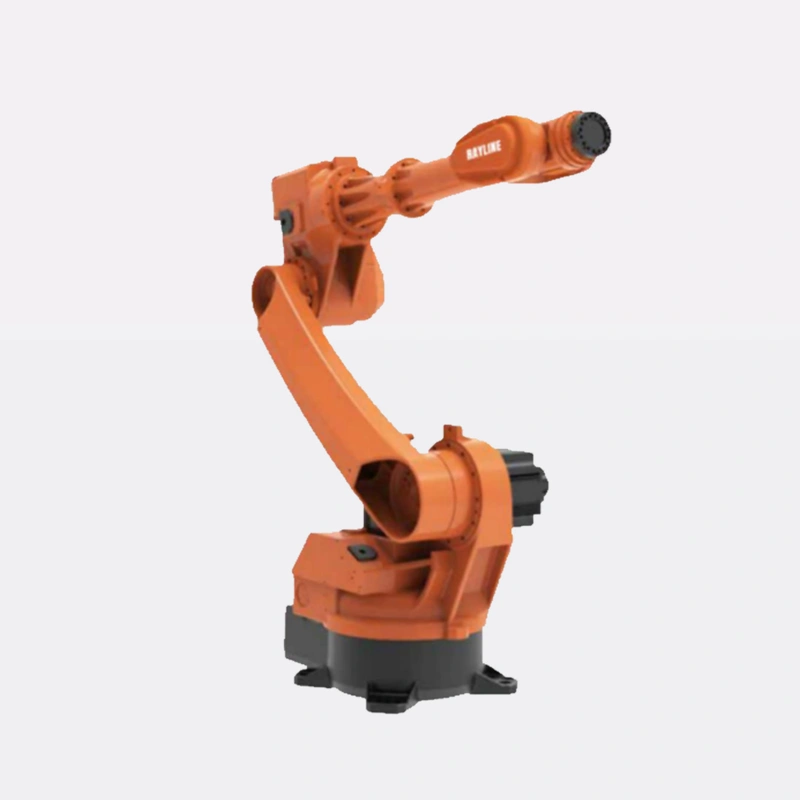
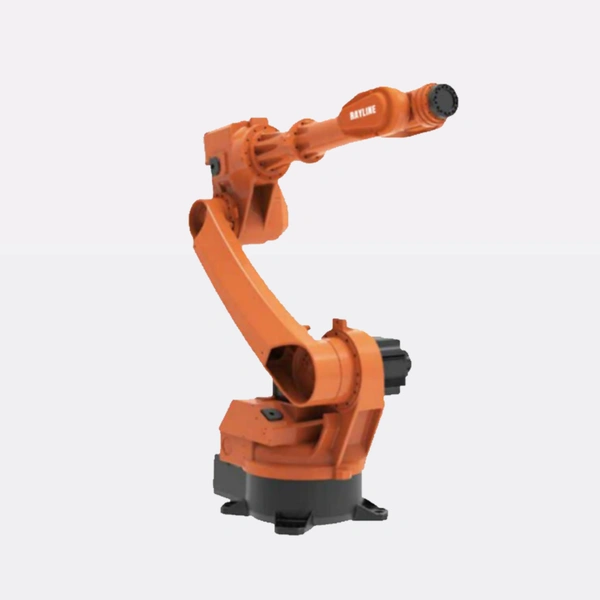
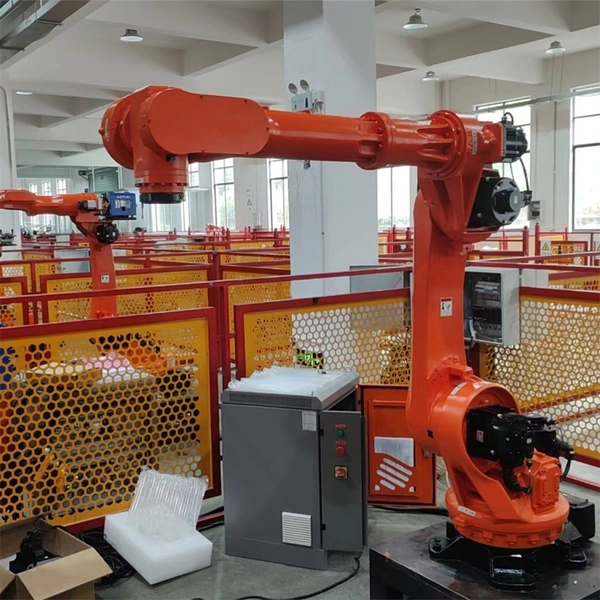
1.1 Structure: It usually consists of a base, big arm, small arm, wrist and end flange.
1.2 Joints and Degrees of Freedom: Connected by multiple joints (rotating or moving), providing different degrees of freedom (DOF). The six-axis industrial robot has 6 degrees of freedom and simulates the flexibility of a human arm.
1.3 End effector: A tool installed at the end of the wrist that is in direct contact with the object being operated. Such as grippers (pneumatic/electric), suction cups, welding guns, spray guns, grinding heads, laser cutting heads, etc.
2. Drive system
This is the "power source" of industrial robots and is responsible for providing the energy needed for movement of various joints.
2.1 Servo motors: most commonly used, providing high precision and high response position and speed control.
2.2 Hydraulic/Pneumatic Devices: Used in heavy-duty (hydraulic) or simple clamping (pneumatic) scenarios, but less common in high-precision multi-axis robots.
2.3 Reducer: Connects the motor to the joint to reduce the speed, increase torque, and improve positioning accuracy.
Key components: RV reducer (often used for heavy load joints) and harmonic reducer (often used for light load or wrist joints).
3. Control system
This is the "brain" of the robot, which processes information, plans paths, and gives instructions.
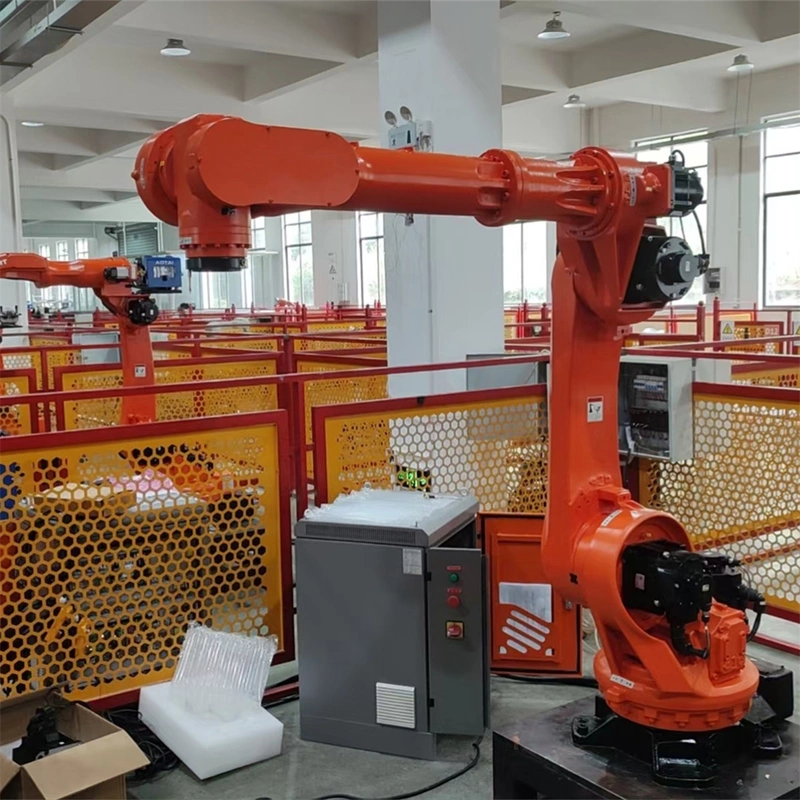
3.1 Controller hardware: An industrial computer or a dedicated control cabinet containing CPU, memory, and interface circuits.
3.2 Control Software/Algorithm:
3.2.1 Motion Control: Solve inverse kinematics and plan joint movement trajectories to ensure smoothness and precision.
3.2.2 Logic Control: Process input and output signals (I/O) and coordinate cooperation with other devices (e.g., conveyor belts, sensors).
3.2.3 Human-Machine Interface (HMI): Teach Pendant for operators to program, debug, and monitor robot status.
4. Perception system
This is the "five senses" of the robot, which is used to obtain internal status and external environment information, and is the key to achieving intelligence.
4.1 Internal Sensors:
4.1.2 Encoder: Detect motor angle and speed to achieve closed-loop control.
4.1.3 Torque sensor: detects joint force and is used for collision detection or force control grinding.
4.2 External Sensors:
4.2.1 Vision system: industrial camera, 3D scanner, for positioning, identification, quality inspection.
4.2.2 Force/Tactile Sensors: Mounted at the end for precision assembly or constant force grinding.
4.2.3 Safety sensors: Lidar, safety light curtains, used to monitor surrounding personnel and ensure safe shutdown.
5. Assistive systems
While not a core moving part, it is essential for running:
5.1 Power supply system: power supply unit, voltage regulator.
5.2 Air Circuit System: Provides compressed air to the pneumatic gripper or balance cylinder.
5.3 Cooling System: Fan or water cooling device to prevent overheating of the motor and control cabinet.
5.4 Safety fence and emergency stop button: physical protection that meets safety standards.

| Model | YH35A-200 |
| Axis | 6 Axis |
| Body Weight | 334KG |
| Rated Payload | 35KG |
| Max Range | 200CM |
| Repeatability | ± 0.05mm |
| IP Grade | IP65/ IP65 (Wrist) |
| Installation | Ground, Ceiling, Wall |
| Humidity | 20%-80%(No-Humidity) |
| Vibration | ≤4.9m/S2 |
| Other | No flammable and corrosive gases, liquids, away from electrical noise sources. |
| Axis | Motion Range | Max Speed | Hollow Axis Diameter |
| J1 | ±170° | 162°/S | - |
| J2 | +85°~ -155° | 162°/S | - |
| J3 | +130°~ -85° | 148°/S | - |
| J4 | ±170° | 295°/S | Φ36 |
| J5 | +118°~ -140° | 294°/S | - |
| J6 | ±360° | 411°/S | - |

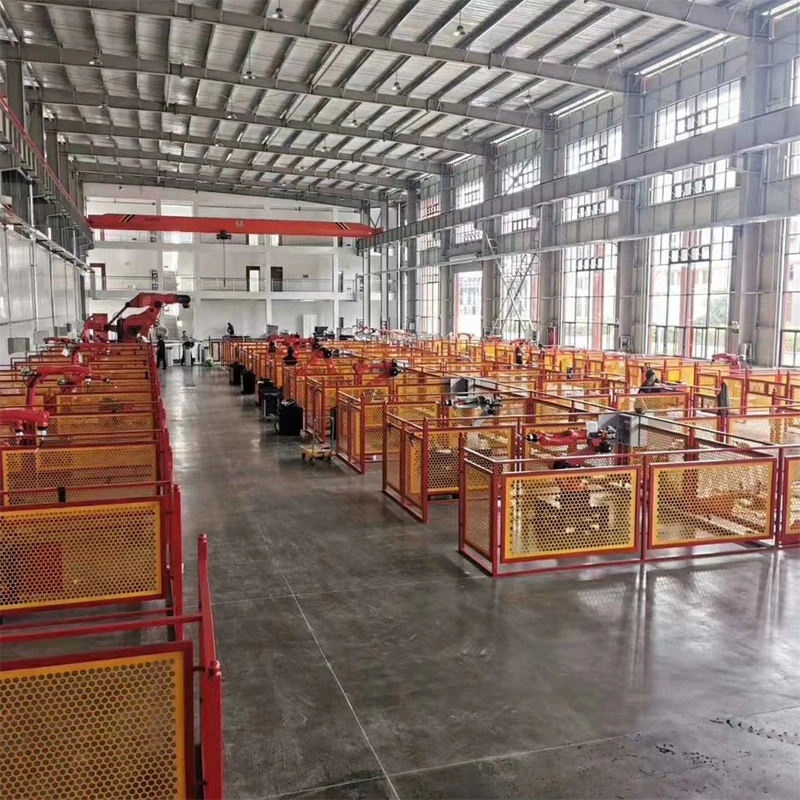
Industrial robots have now penetrated almost all manufacturing industries. The core is: to replace humans in performing repetitive, dangerous, and high-precision tasks.
1. The most mainstream applications
1.1 Handling, loading and unloading
1.1.1 Automatic material pickup and placement for machine tools, injection molding machines, stamping machines
1.1.2 Material transfer in warehouses and production lines
1.2 Welding
1.2.1 Spot welding and arc welding of car bodies
1.2.2 Welding of steel structures, construction machinery, and pipes
1.3 Assembly
1.3.1 Screw fastening, bearing installation, component assembly
1.3.2 Assembly of 3C electronics, home appliances, and automotive components
1.4 Grinding, polishing, deburring
1.4.1 Processing of hardware, bathroom fittings, die-cast parts, aluminum alloy parts
1.4.2 Replacing manual labor, reducing dust-related harm
1.5 Spraying, coating
1.5.1 Painting for cars, home appliances, furniture
1.5.2 Explosion-proof, uniform, paint-saving
1.6 Palletizing, packing
1.6.1 Automatic stacking of cartons, bags, and barrels
1.6.2 Commonly used in food, beverages, chemicals, logistics
1.7 Inspection, sorting
1.7.1 비전 로봇: 외관 검사, 치수 측정, 불량품 분류
1.7.2 전자, 식품, 제약 산업에서 널리 사용됨
1.8 절단, 가공
1.8.1 레이저 절단, 워터젯 절단, 게이트 트리밍, 드릴링
1.8.2 자동차, 판금, 고무 및 플라스틱 가공
2. 주요 적용 산업 분야
2.1 자동차 제조(최대 사용자): 점 용접, 아크 용접, 조립, 스프레이
2.2 3C 전자제품, 휴대폰, 컴퓨터: 조립, 검사, 접착제 도포
2.3 건설 기계, 굴삭기, 크레인: 용접, 연삭
2.4 하드웨어 및 가전제품, 에어컨, 냉장고, 주방용품: 용접, 조립
2.5 식품 및 의약품: 분류, 포장, 팔레타이징
2.6 물류 및 창고 관리: 팔레트 해체, 적재 및 하역
2.7 철도 운송, 선박, 철골 구조물: 용접, 절단
3. 로봇 사용의 이점
3.1 안정적인 품질 및 높은 일관성
3.2 24시간 연속 작동, 고효율
3.3 작업상 재해 및 직업병, 용접 연기, 연삭 분진, 고온 감소
3.4 인건비 절감으로 대량 생산에 적합합니다.
효율성 향상
- 24시간 중단 없이 작동 가능하며 피로도에 따른 제약이 없습니다. 로봇 한 대가 2~3명의 수작업자를 대체할 수 있습니다.
- 특정 전자상거래 물류창고에 도입된 후, 일일 주문 처리량이 5만 개에서 12만 개로 증가하여 효율성이 140% 향상되었습니다.
- 공장 내 차량의 스테이션 간 이동 시간이 15분에서 5분으로 단축되었고, 생산 라인 사이클 시간은 67% 증가했습니다.
비용 절감
- 중형 창고(로봇 5대 도입)는 연간 40만 위안 이상의 인건비를 절감합니다. 장비 투자 비용은 일반적으로 1~2년 내에 회수됩니다.
- 에너지 소비량은 기존 지게차의 30%에 불과합니다. 자동 충전을 지원하며, 1시간 충전으로 4시간 동안 운행할 수 있습니다.
안전성과 정확성
- 다중 센서 장애물 회피 시스템은 응답 시간이 100ms 이하입니다. 장애물을 만났을 때 0.3초 이내에 제동을 완료할 수 있습니다.
- 산업 창고에 적용한 결과, 취급 안전사고 발생률이 0으로 감소했습니다.
- 상품 분류 오류율은 수작업 시 0.1%에서 0.01%로 감소했으며, 상품 파손율은 2%에서 0.2% 미만으로 감소했습니다.
- 새로운 Ren 알루미늄 호일 로봇 모자체 시스템의 재료 위치 정밀도는 5mm 오차 범위 내에서 제어됩니다.
유연성과 지능
- 로봇은 근거리 통신망을 통해 자율적으로 네트워크를 형성하고 경로 계획 및 작업 할당을 자율적으로 협상할 수 있습니다.
- 이 시스템은 완벽하게 통합되어 "창고 관리 - 취급 - 분류 - 출고"의 모든 공정을 자동화합니다.
- 한 제조 기업에 적용된 후, 생산 라인의 자재 추적 효율성이 80% 증가했습니다.