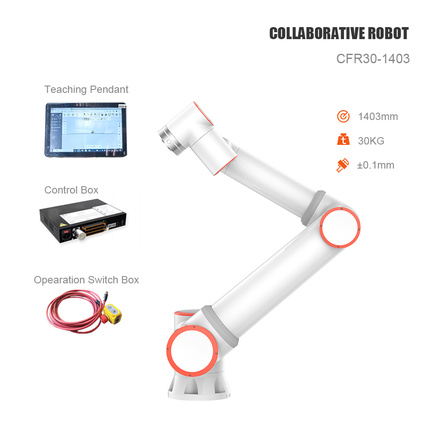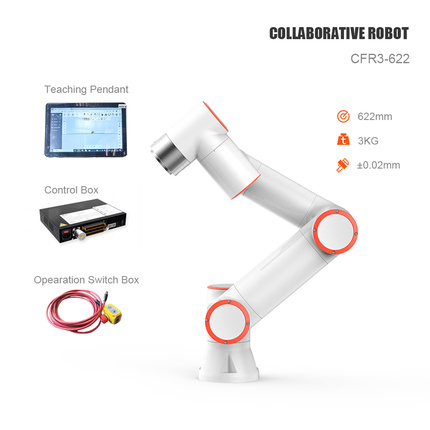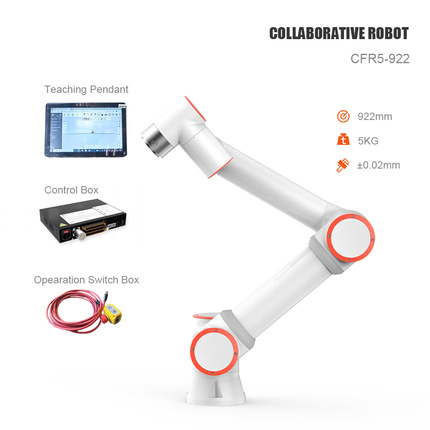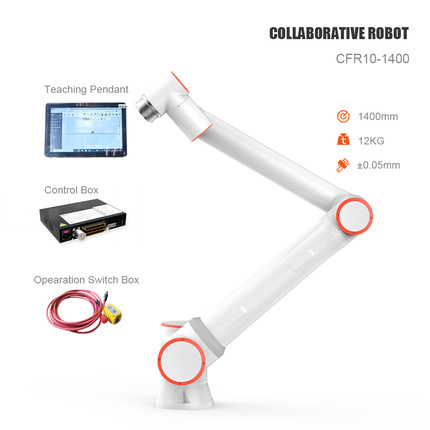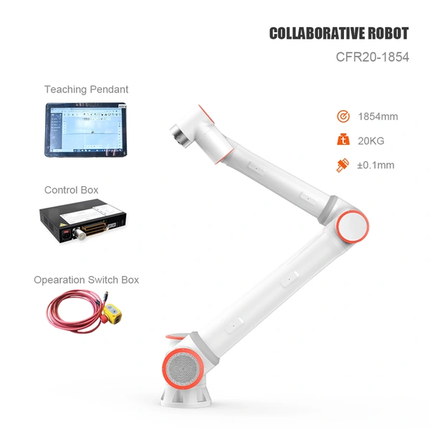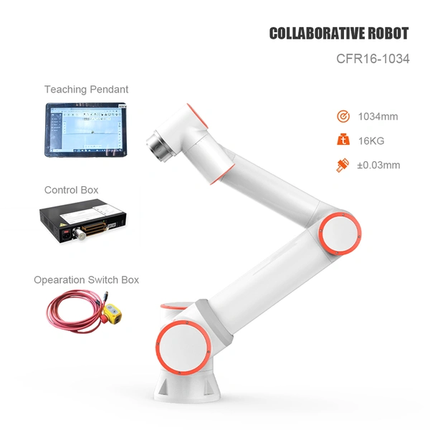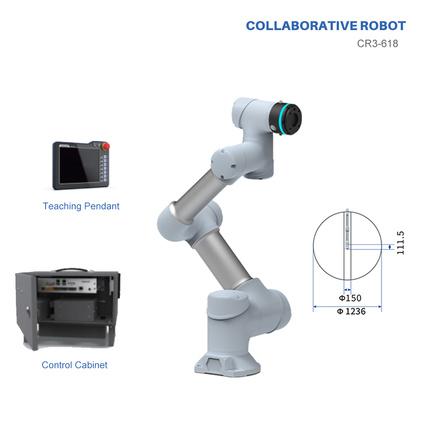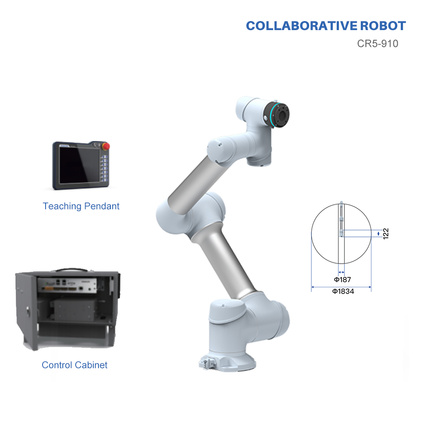















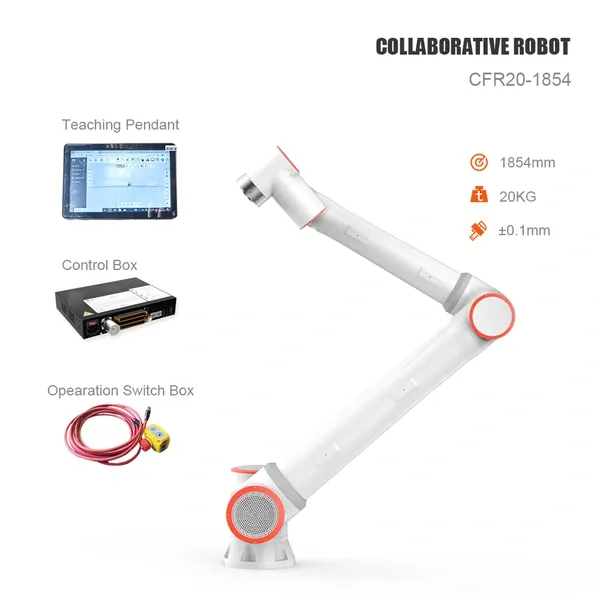


The collaborative robot is an intelligent robotic device specifically designed to safely collaborate with humans in the same working space. Unlike traditional industrial robots that require physical isolation with safety barriers, collaborative robots, equipped with built-in force sensors, collision detection, and lightweight design, can work side by side with workers without the need for physical separation.

| Name | Intelligent Collaborative Robot | ||
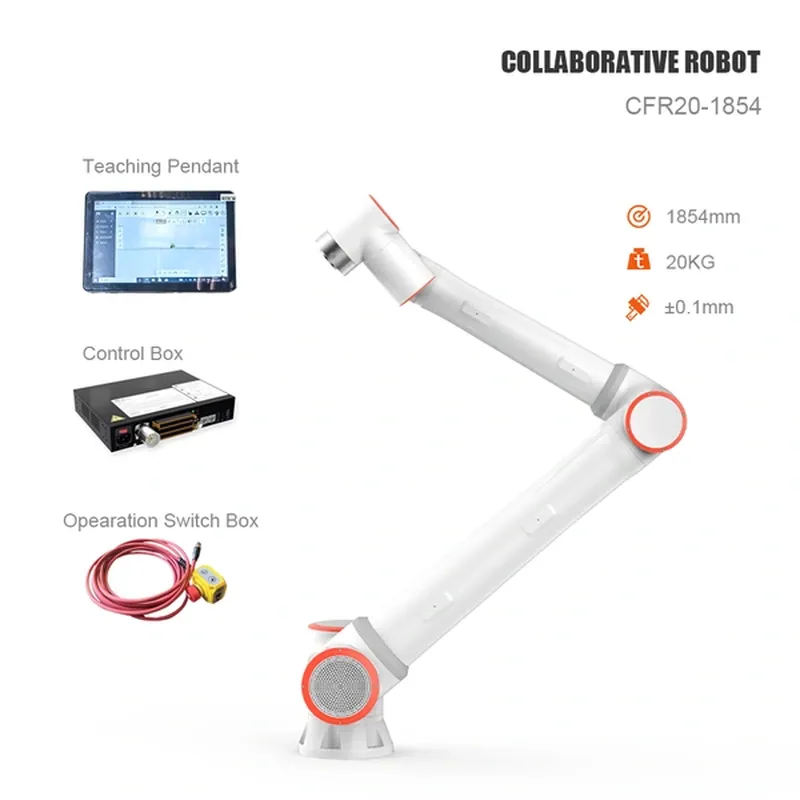
| Specification | Model | CFR20-1854 | |
| Payload | 20kg | ||
| Reach | 1854mm | ||
| Degrees of freedom | 6 rotating joints | ||
| HMI | 10.1 inch teach pendant or mobile terminal Web APP | ||
| Movement | Repeatability | ±0.1mm | |
| Pose repeatability per ISO 9283 | ±0.1mm | ||
| Axis movement | Working range | Maximum speed | |
| 1 axis | ±175° | ±120°/s | |
| 2 axis | ﹢85°/﹣265° | ±120°/s | |
| 3 axis | ±160° | ±120°/s | |
| 4 axis | ﹢85°/﹣265° | ±180°/s | |
| 5 axis | ±175° | ±180°/s | |
| 6 axis | ±175° | ±180°/s | |
| Typical TCP speed | 2m/s | ||
| Features | IP classification | IP54(IP65 Optional) | |
| Noise | <65db | ||
| Robot mounting | Any orientation | ||
| I/O Ports | Digital input (DI) 2 digital output (DO) 2 analog input(AI) 2 analog ouput(AO) 2 High speed pulse input 2 | ||
| Tool I/O power supply | 24V/1.5A | ||
| Physical | Footprint | 240 mm | |
| Weight | 85kg(Weight without wire) | ||
| Operating temperature | 0-45℃ | ||
| Operating humidity | 90%RH(non-condensing) | ||
| Materials | Aluminium、Steel | ||
| Average Power | 620W | ||
| Control Box | Standard communication | I/O、TCP/IP、Modbus_TCP/RTU | |
| Optional communication | CC-Link、 Profinet、 Ethernet/lP、 EtherCAT | ||
| Software development kit | C#/C++/Python/ROS/ROS2 | ||
| L*W*H | 245*180*89mm | ||
| Weight | 2.957kg | ||
| Materials | Galvanized plate | ||
| Power supply | 30-60VDC | ||
| Machine Language | English, Chinese, Russian, Korean, Japanese, French, etc. Customization supported. | ||

The six-axis collaborative robot is specifically designed for small part handling, assembly, picking and placing, etc. This collaborative robot can maintain safety while working with operators thanks to its built-in torque and safety sensors.
It has a load capacity of 3 kilograms and is designed to be lightweight, making it ideal for electronic assembly, small part sorting, light machine operation, and quality inspection, among other tasks.
Why choose this collaborative robot?
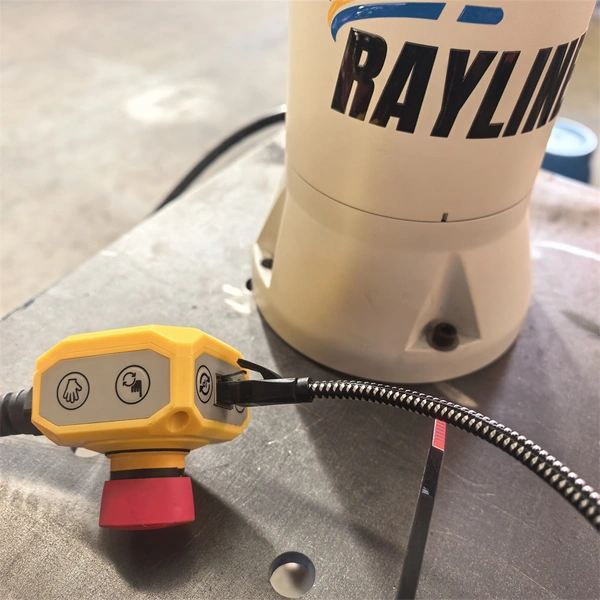
Built-in safety sensors can detect contact situations and immediately stop the robotic arm.
No need for safety barriers - saves factory floor space and installation costs
Complies with ISO 10218 safety standards
Drag-and-drop teaching programming: hold the arm and guide it to complete the action
No programming background required - an employee can learn to operate it in less than an hour.
A graphical interface is provided to handle more complex sequences.
Weighs only [15 kilograms] - one person can carry and re-deploy it
No special foundation or heavy installation fixtures required
Can move work positions between various work areas according to production demand changes
±0.02 millimeters of repeatability error ensures precise placement of tiny components.
The six-axis freedom allows for any-angle operation - perfect for use in narrow spaces
Replace repetitive manual work with automation technology
7X24 hours operation capability
Typical investment payback period: 6 to 12 months

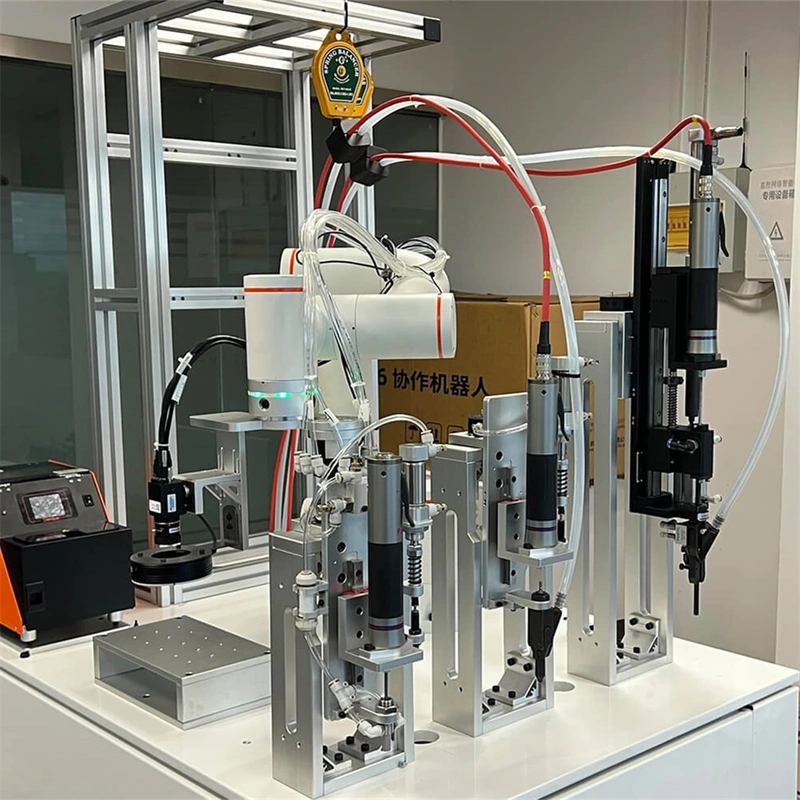
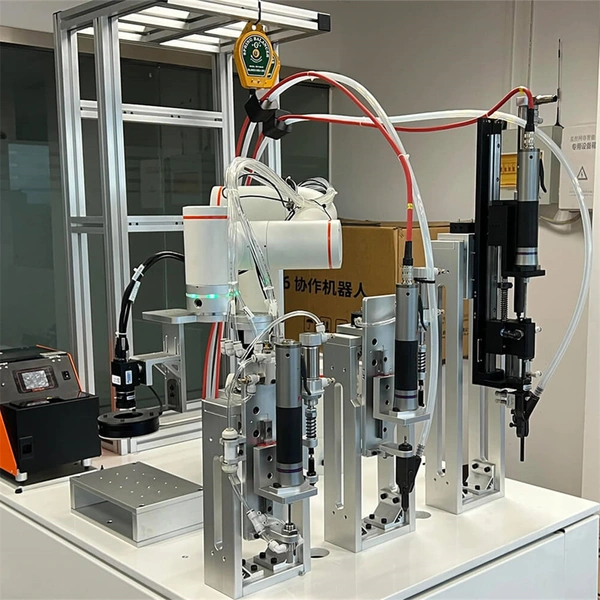
Collaborative robots are widely used in precise assembly and screw fastening, especially in the 3C electronics and automotive parts industries. With a high-precision force control system, collaborative robots can achieve accurate torque control during screw fastening and flexible wiring cable insertion, avoiding product damage caused by improper force. In automotive parts assembly, flexible mechanical arms can flexibly adapt to the assembly requirements of different model components, effectively improving production efficiency and assembly quality.
Collaborative robots are rapidly penetrating industries with high demands for flexible welding, such as steel structures and ships. Through dragging teaching and graphical programming, collaborative robots can quickly switch welding parameters and process paths, solving the problems of complex debugging and high costs in traditional welding equipment in small batch production. UJIAN Technology's "Steel Tailor" intelligent welding robot can autonomously identify weld seams, plan paths, and adjust parameters in real time.
The growth of the palletizing application market is mainly driven by the two major industries of food and beverage and chemical products. The post-packaging process of small and medium-sized food and beverage and daily chemical enterprises mostly still uses manual handling, resulting in low efficiency and rising labor costs. Collaborative palletizing robots have better solved these problems, achieving automated flexible palletizing, and the market is growing rapidly.
Collaborative robots can cooperate with CNC machines, injection molding machines, etc., to achieve automated loading and unloading, reducing the labor intensity of manual work. In the electronics production line, collaborative robots can save waiting time at workstations by using dual gripper positions and improve production efficiency. For example, after a collaborative robot grabs a component from secondary injection molding, it is sent to the cutting board and automatically cycles, requiring only one operator per shift, and the production capacity can be increased by three times.
Combined with machine vision technology, collaborative robots can perform product appearance inspection, size measurement, etc., improving the quality control level. In PCB circuit board inspection, collaborative robots are equipped with structured light systems to accurately detect micro cracks, bent pins, etc., and record each inspection data to achieve quality traceability.
Collaborative robots, with their flexible deployment and human-machine collaboration characteristics, are gradually overcoming the pain points of low efficiency and large dust hazards in traditional grinding operations. In fine grinding of 3C product appearance parts and surface treatment of automotive parts in specific scenarios, their application potential is huge.
With the launch of explosion-proof collaborative robots, the application of collaborative robots has gradually expanded to painting work in high-temperature and high-risk environments, and its recognition in the painting field has increased due to its high sealing and dust-proof characteristics.
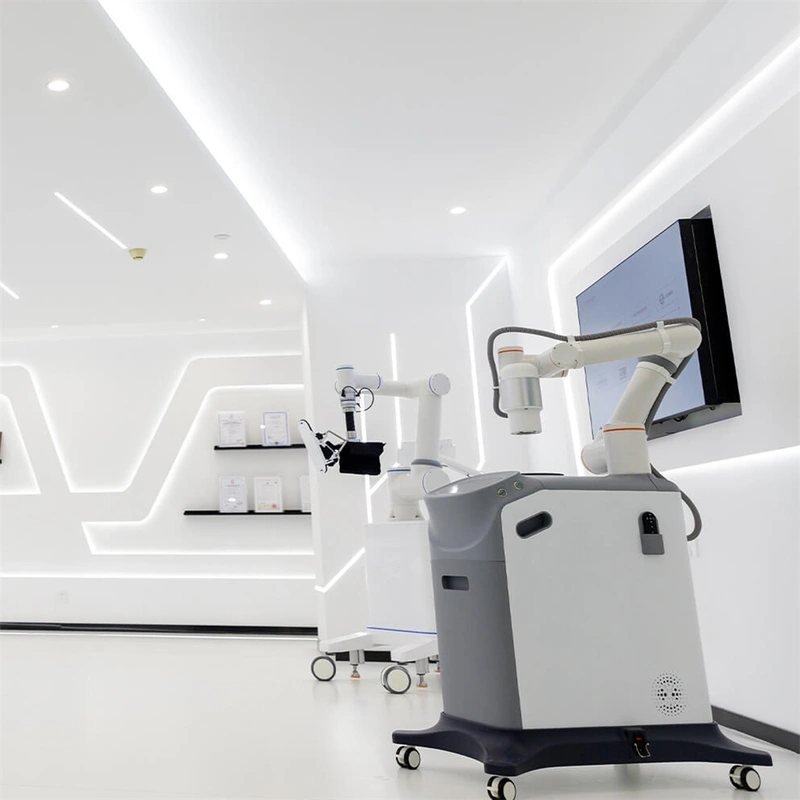
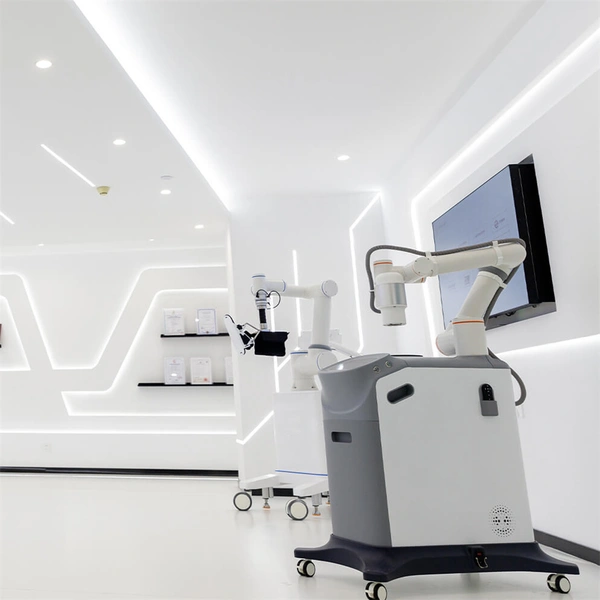
Surgical assistance: Collaborative robots can assist doctors in performing minimally invasive surgeries, improving operation stability and accuracy.
Rehabilitation training: In rehabilitation medicine, collaborative robots can help patients perform limb movement training to promote functional recovery.
Laboratory automation: Collaborative robots can be used for sample sorting, tube transportation, and experimental operations, improving laboratory efficiency and reducing the risk of human contamination. In diagnostic laboratories, collaborative robots handle samples in clean rooms without rest, contamination, or errors.
Warehouse handling: Collaborative robots can be combined with AGVs to achieve automatic handling and stacking of goods.
Order sorting and packaging: In e-commerce logistics centers, collaborative robots can quickly identify and sort goods and complete automated packaging. For example, Vention's collaborative robots can fold 5-7 boxes per minute, accurately completing the packing.
Smart Coffee Workstation: Equipped with a standardized robotic arm control system, it can not only perform general coffee-making procedures but also customize extraction time and milk froth ratio according to user preferences.
Food Preparation: Collaborative robots can be used for cake decoration, food packaging, etc. From cream frosting to sushi rolling, collaborative robots complete precise decoration and packaging with food-grade safety standards.
Smart Massage Workstation: Through standardized mechanical transmission and pressure feedback modules, combined with user body type data, it provides personalized massage plans.
Guidance and Customer Service: Some collaborative robots have voice interaction and navigation functions, which can be applied in shopping malls, airports, etc. to provide guidance and consultation services.
Collaborative robots can be used for fruit and vegetable picking and greenhouse management to improve the automation level of agricultural production.
Energy: Assist in equipment inspection and maintenance in dangerous environments to ensure personnel safety.
Education: As a teaching tool, it helps students and researchers learn robot programming and application technologies.