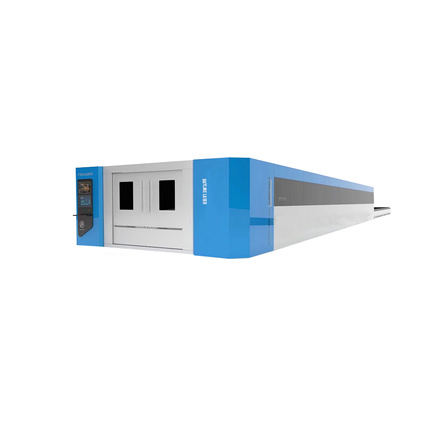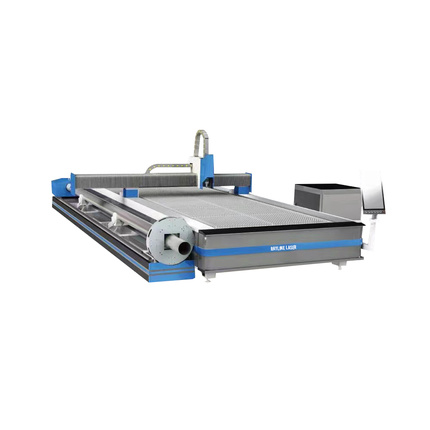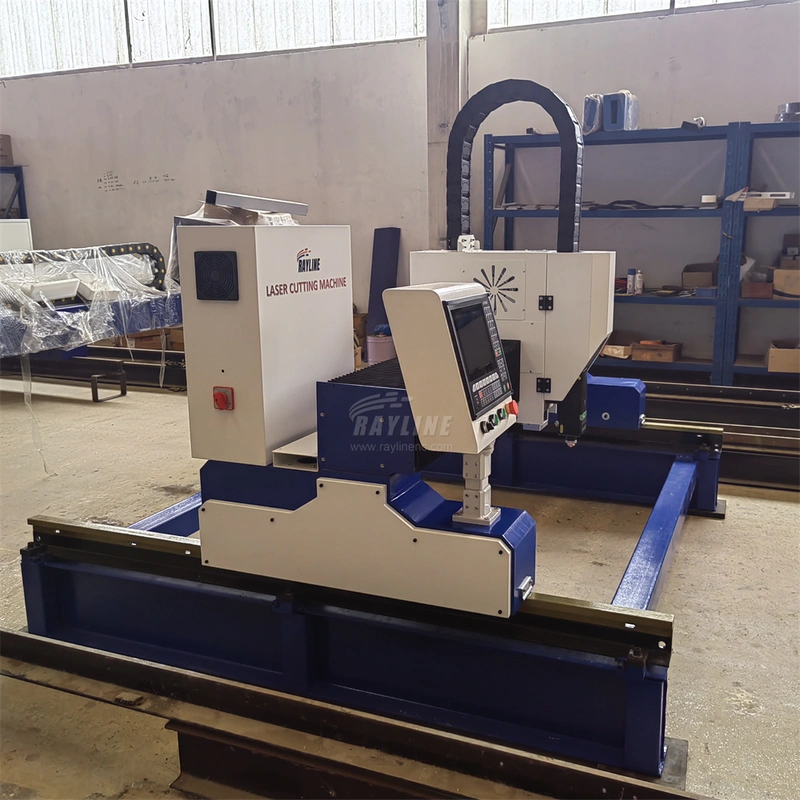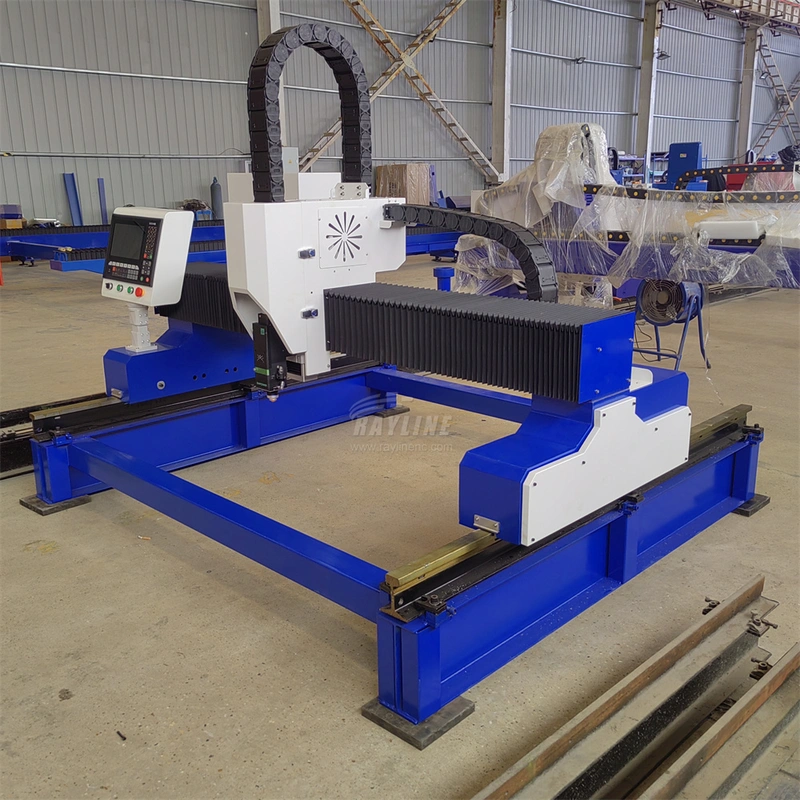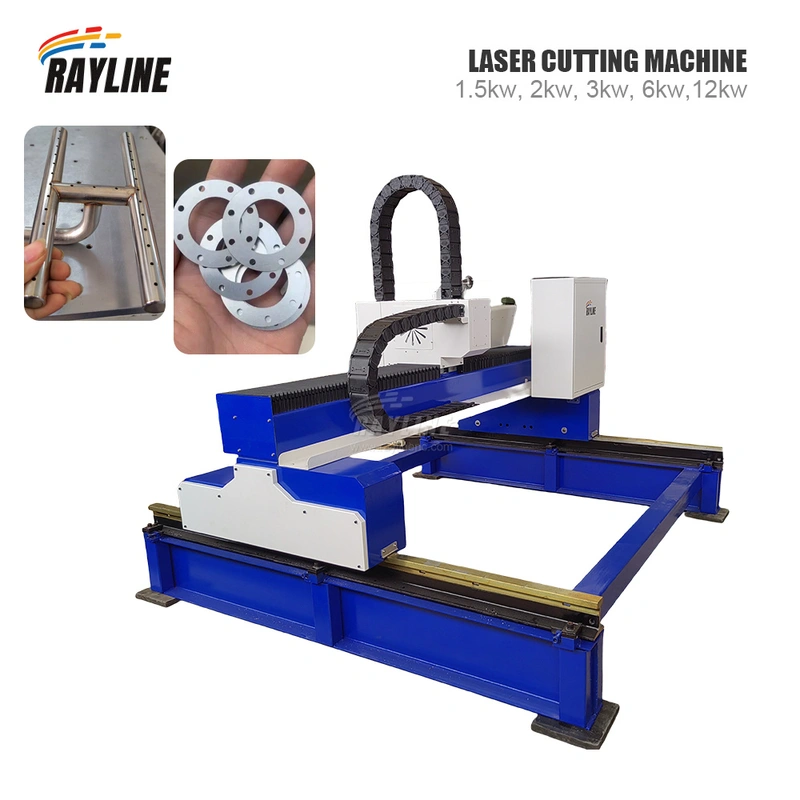















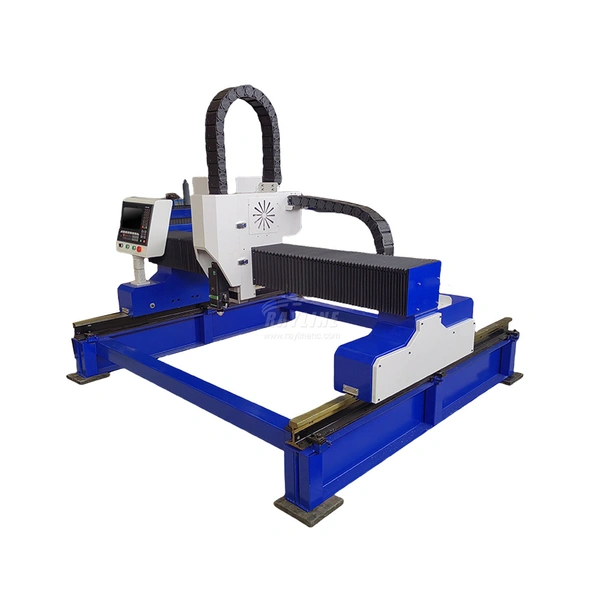
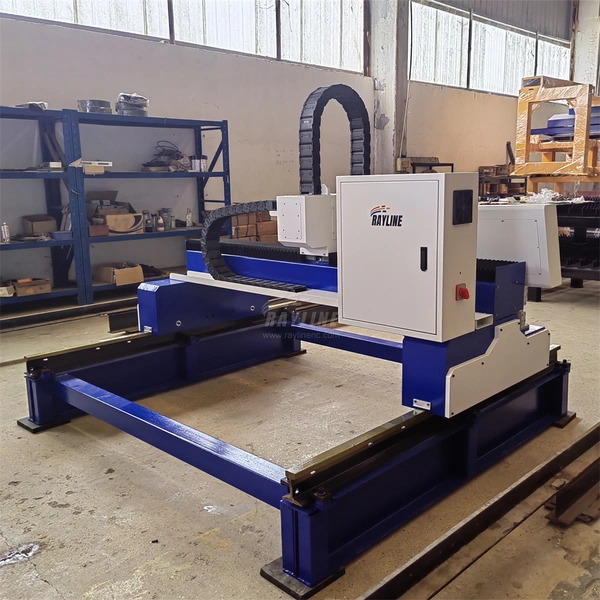
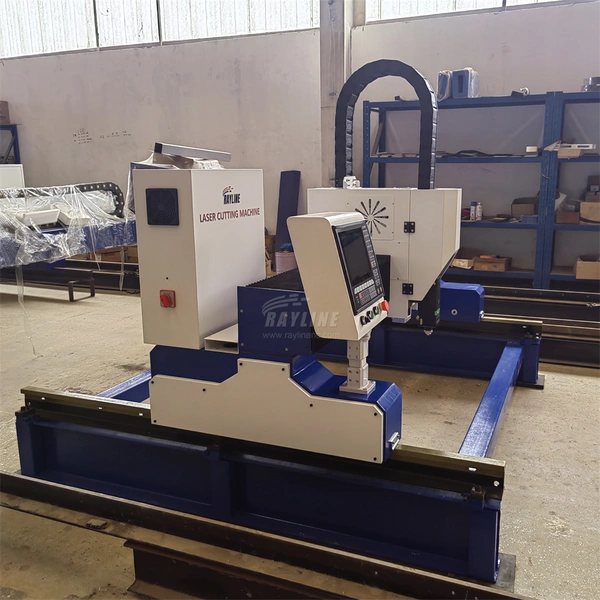

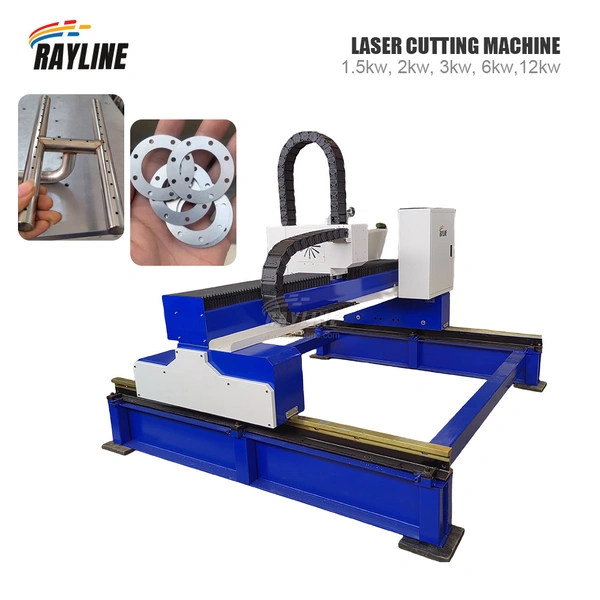


The gantry structure laser cutting machine is a large-scale laser cutting equipment that uses a mobile gantry frame as the core motion mechanism. By moving the gantry beam in the X-axis and Y-axis directions, the laser head is driven to complete precise cutting of large panels. It is one of the core equipment in the modern metal processing field. The gantry structure laser cutting machine, with its high precision, high efficiency, large-scale processing capability and high automation level, has become a core equipment in the modern metal processing field. Its core technology - bilateral drive, high rigidity gantry beam, and precise transmission system. Ensures the stability and accuracy of the equipment during high-speed operation. With the increase of laser power and the advancement of automation technology, the gantry structure laser cutting machine is developing towards a more efficient, intelligent and integrated direction. It plays an irreplaceable role in heavy industry fields such as aerospace, automotive manufacturing, construction machinery, and shipbuilding.
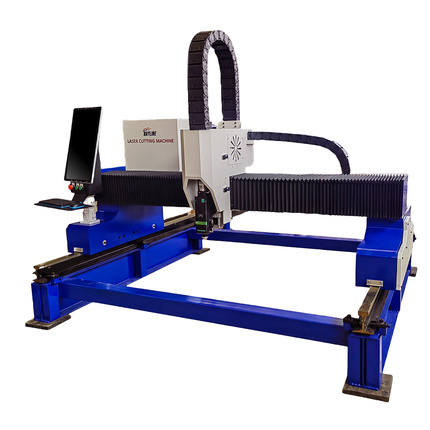
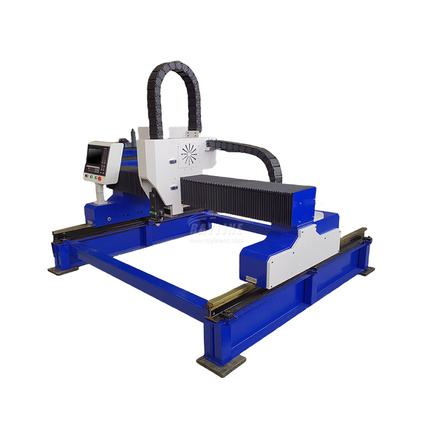
In a laser cutting machine, the gantry structure consists of the following core components:
1. The two side bases, made of steel plate welding, with precise machining, support the entire gantry beam and provide a stable rigid foundation.
2. The gantry beam, made of steel plate welding, with precise machining, spans the moving beam of the worktable, bearing the movement of the laser head.
3. The laser cutting head, installed on the beam, performs the actual cutting operation.
4. The bilateral drive system, with servo motors and gear racks symmetrically installed on both sides of the beam, realizes synchronous driving.
5. The gantry beam is erected above the worktable and can move along the length direction of the worktable (X-axis); at the same time, the laser head can move along the width direction of the beam (Y-axis) on the gantry, thus covering the entire worktable area.
6.The laser is the 'heart' and core component of the laser cutting machine, and its most fundamental function is to generate a high-energy-density laser beam, providing the energy source for the cutting process.

1. High Precision
The gantry structure laser cutting machine employs advanced CNC technology and high-precision sensors, with a positioning accuracy of ±0.03mm/m and a repeat positioning accuracy of ±0.03mm. It can achieve cutting precision at the micrometer level.
2. High efficiency
Large-format one-time positioning cutting, no need for multiple clamping, supports 24-hour continuous unmanned production.
3. Large-scale processing capability
The gantry structure is inherently well-suited for large-scale processing: The width of the worktable can reach 3-4 meters, and the length can be extended up to 40 meters, capable of handling various materials ranging from thin sheets to 60mm thick plates.
4. High flexibility
It can cut various complex-shaped workpieces without being limited by the hardness of the material. It can handle a wide range of metal materials such as stainless steel, carbon steel, aluminum alloy, and copper alloy.
5. High degree of automation
Equipped with advanced control systems, it can achieve functions such as automatic programming, automatic edge detection, automatic nozzle replacement, and automatic focus adjustment, and supports the completion of night shift production without human intervention.
6. Excellent accessibility and safety
Some designs employ a closed-type gantry structure - only the area of the gantry is enclosed, not the entire machine. This not only ensures laser safety but also facilitates the operator's loading and unloading operations. Multi-zone laser scanners can monitor the working area in real time to ensure personnel safety.
The most distinctive technical feature of the gantry structure laser cutting machine is the dual drive. On both sides of the crossbeam, gear racks and servo motors are symmetrically installed to achieve dual gear rack transmission and dual servo motor drive. The advantages of dual drive: Ensure that the forces on both ends of the crossbeam are balanced, and the operation is synchronized. Improve positioning accuracy and dynamic performance, and avoid the asymmetry of forces on both ends caused by single-sided drive.
The gantry crossbeam is a key moving component that bears the laser head, and its rigidity directly affects the cutting accuracy. High-end models adopt high-strength aluminum extrusion profiles or steel welded structures, and through finite element analysis, optimize the internal rib plate layout to achieve high rigidity while maintaining lightweight.
The transmission system of the gantry structure usually employs precise gear-rack combination with high-torque reducers to achieve high-speed and high-precision linear motion.
The bed of the gantry cutting machine is usually made of heavy-duty steel structure. It undergoes treatments such as annealing and vibration tempering to eliminate internal stress, ensuring the stability during long-term use. High-end models also completely separate the worktable from the bed to avoid the thermal effect during cutting and the impact vibration and shock transmitted from loading and unloading to the bed, which would affect the accuracy.

The gantry structure laser cutting machine is widely used in industries that require large-format and high-precision metal cutting:
1. Metal processing / sheet metal processing, precise cutting of stainless steel, carbon steel, and aluminum alloy sheets.
2. Construction machinery, cutting of structural components for excavators and cranes.
3. Automotive manufacturing, cutting of body parts and chassis components.
4. Aerospace, precise cutting of aircraft skins and structural components.
5. Shipbuilding, cutting and material removal of ship plates.
6. Rail transportation, processing of structural components for high-speed rail and subway carriages.
7. Military manufacturing, cutting of special armor plates and structural components.
In addition, some high-end gantry laser cutting machines also integrate functions such as drilling, tapping, milling, and groove cutting, achieving "one machine for multiple uses". They can complete all the processing procedures of complex parts in one go, significantly reducing material handling and secondary clamping.