
















Core Technology Principles
The operation of the YH series handling robot is based on the coordinated work of four core components:
1. Environmental perception and positioning
- Utilize multi-sensor fusion technology, including laser radar, visual sensors, and ultrasonic sensors.
- Laser SLAM navigation can achieve a positioning error of ±10mm, and can autonomously map and navigate without preset beacons.
- Visual SLAM navigation uses cameras to identify environmental features, has relatively low cost, and is suitable for stable lighting scenarios.
2. Motion Control System
- Light-load scenario (≤500kg): Utilizes differential drive or McNamee wheels, supporting flexible movements such as forward motion, lateral movement, and rotation, suitable for narrow passage operations.
- Heavy-load scenario (≥1 ton): Utilizes steering wheel drive + fork lifting mechanism, with a carrying capacity of up to 5 tons or more.
- Capable of operating in narrow passages.
3. Autonomous Path Planning
- Real-time calculation of the optimal transportation route, with response time less than 500ms.
- When multiple robots are operating in a cluster, the system automatically optimizes the path to avoid congestion.
- When encountering dynamic obstacles, it can autonomously decide to detour or wait instead of simply stopping.
4. Multi-sensor Fusion Obstacle Avoidance
- Equipped with 16-line laser radar (horizontal field of view 270°), ground distance detection device (0.1 - 3m), and collision sensor (trigger pressure threshold 0.5N).
- Through the trajectory compensation mechanism, the bottom camera captures ground features for real-time position calibration.

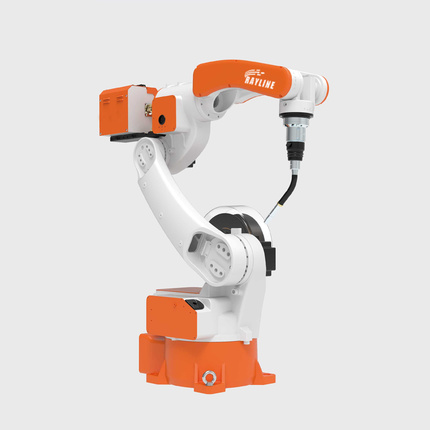
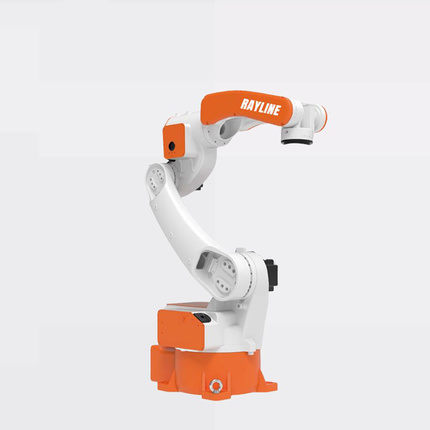
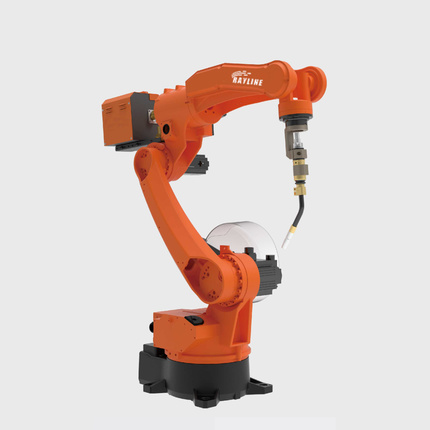
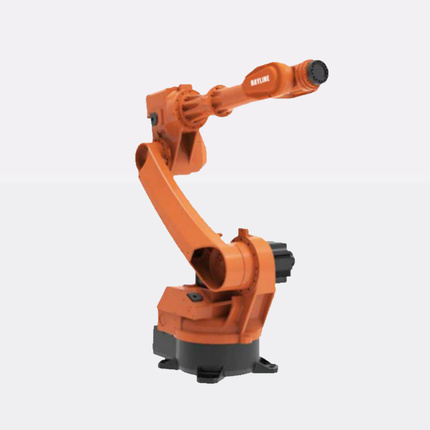
Composition of Industrial Robots
1. Mechanical body
These are the "bones" and "muscles" of the robot, the part that directly performs the action.
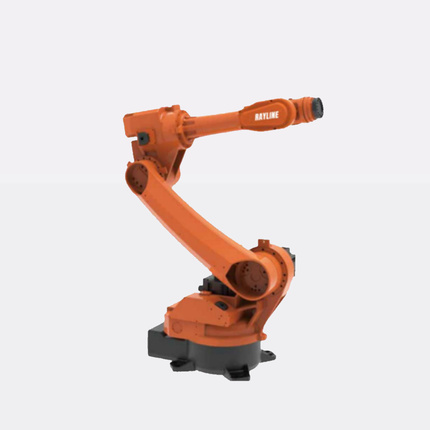
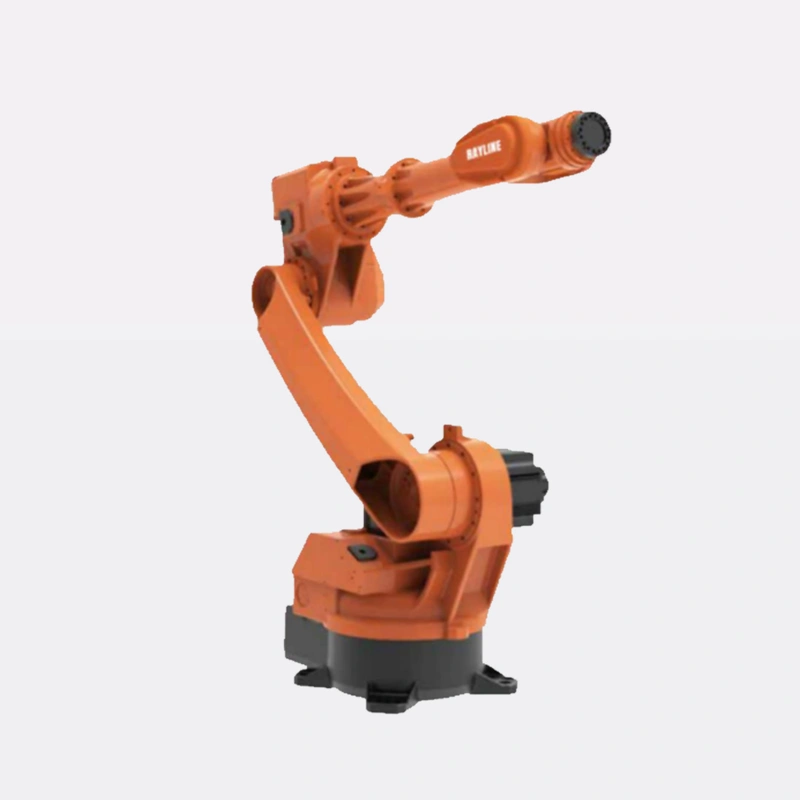
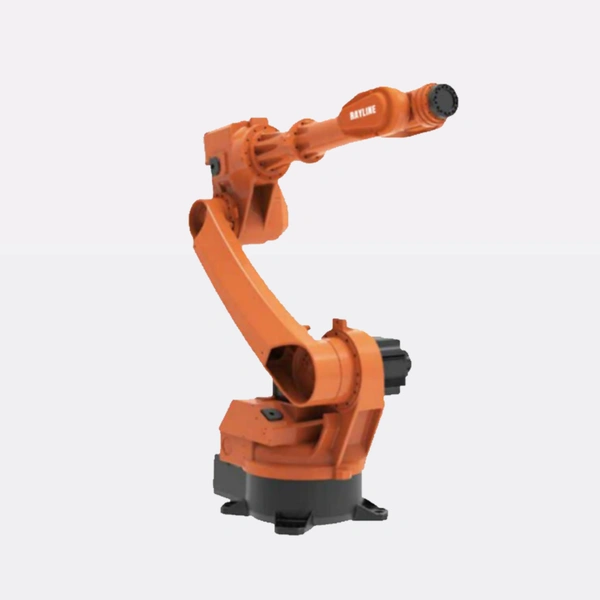
1.1 Structure: It usually consists of a base, big arm, small arm, wrist and end flange.
1.2 Joints and Degrees of Freedom: Connected by multiple joints (rotating or moving), providing different degrees of freedom (DOF). The six-axis industrial robot has 6 degrees of freedom and simulates the flexibility of a human arm.
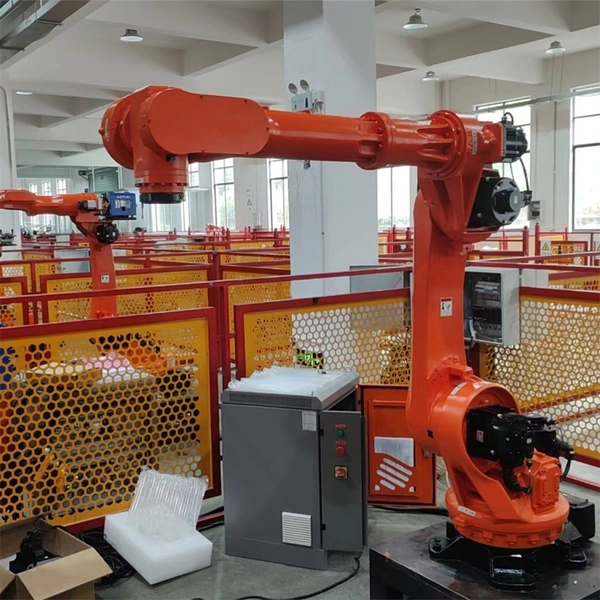
1.3 End effector: A tool installed at the end of the wrist that is in direct contact with the object being operated. Such as grippers (pneumatic/electric), suction cups, welding guns, spray guns, grinding heads, laser cutting heads, etc.
2. Drive system
This is the "power source" of industrial robots and is responsible for providing the energy needed for movement of various joints.
2.1 Servo motors: most commonly used, providing high precision and high response position and speed control.
2.2 Hydraulic/Pneumatic Devices: Used in heavy-duty (hydraulic) or simple clamping (pneumatic) scenarios, but less common in high-precision multi-axis robots.
2.3 Reducer: Connects the motor to the joint to reduce the speed, increase torque, and improve positioning accuracy.
Key components: RV reducer (often used for heavy load joints) and harmonic reducer (often used for light load or wrist joints).
3. Control system
This is the "brain" of the robot, which processes information, plans paths, and gives instructions.
3.1 Controller hardware: An industrial computer or a dedicated control cabinet containing CPU, memory, and interface circuits.
3.2 Control Software/Algorithm:
3.2.1 Motion Control: Solve inverse kinematics and plan joint movement trajectories to ensure smoothness and precision.
3.2.2 Logic Control: Process input and output signals (I/O) and coordinate cooperation with other devices (e.g., conveyor belts, sensors).
3.2.3 Human-Machine Interface (HMI): Teach Pendant for operators to program, debug, and monitor robot status.
4. Perception system
This is the "five senses" of the robot, which is used to obtain internal status and external environment information, and is the key to achieving intelligence.
4.1 Internal Sensors:
4.1.2 Encoder: Detect motor angle and speed to achieve closed-loop control.
4.1.3 Torque sensor: detects joint force and is used for collision detection or force control grinding.
4.2 External Sensors:
4.2.1 Vision system: industrial camera, 3D scanner, for positioning, identification, quality inspection.
4.2.2 Force/Tactile Sensors: Mounted at the end for precision assembly or constant force grinding.
4.2.3 Safety sensors: Lidar, safety light curtains, used to monitor surrounding personnel and ensure safe shutdown.
5. Assistive systems
While not a core moving part, it is essential for running:
5.1 Power supply system: power supply unit, voltage regulator.
5.2 Air Circuit System: Provides compressed air to the pneumatic gripper or balance cylinder.
5.3 Cooling System: Fan or water cooling device to prevent overheating of the motor and control cabinet.
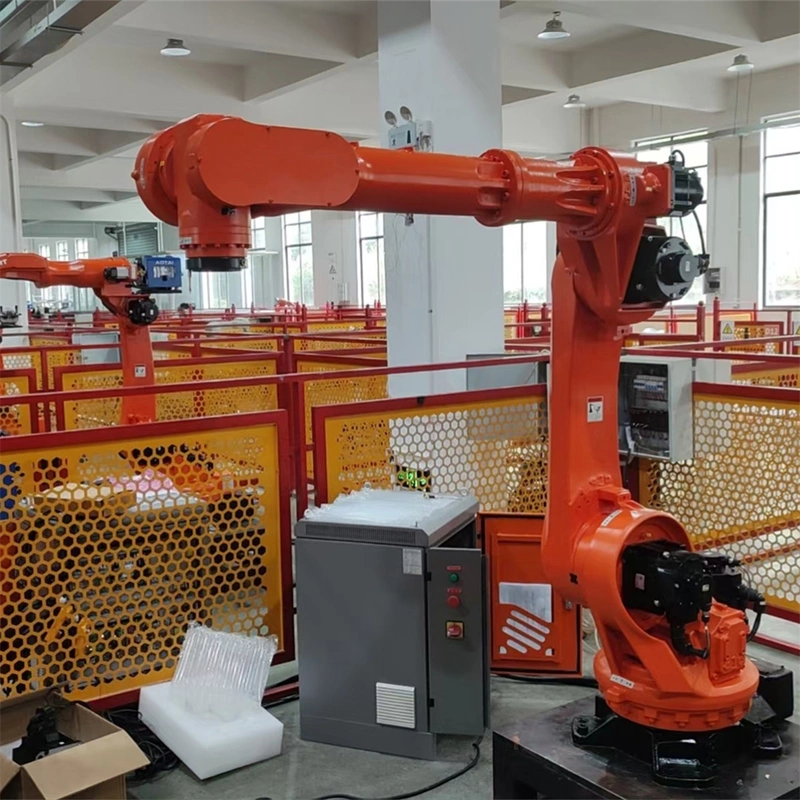
5.4 Safety fence and emergency stop button: physical protection that meets safety standards.

| Model | YH35A-200 |
| Axis | 6 Axis |
| Body Weight | 334KG |
| Rated Payload | 35KG |
| Max Range | 200CM |
| Repeatability | ± 0.05mm |
| IP Grade | IP65/ IP65 (Wrist) |
| Installation | Ground, Ceiling, Wall |
| Humidity | 20%-80%(No-Humidity) |
| Vibration | ≤4.9m/S2 |
| Other | No flammable and corrosive gases, liquids, away from electrical noise sources. |
| Axis | Motion Range | Max Speed | Hollow Axis Diameter |
| J1 | ±170° | 162°/S | - |
| J2 | +85°~ -155° | 162°/S | - |
| J3 | +130°~ -85° | 148°/S | - |
| J4 | ±170° | 295°/S | Φ36 |
| J5 | +118°~ -140° | 294°/S | - |
| J6 | ±360° | 411°/S | - |

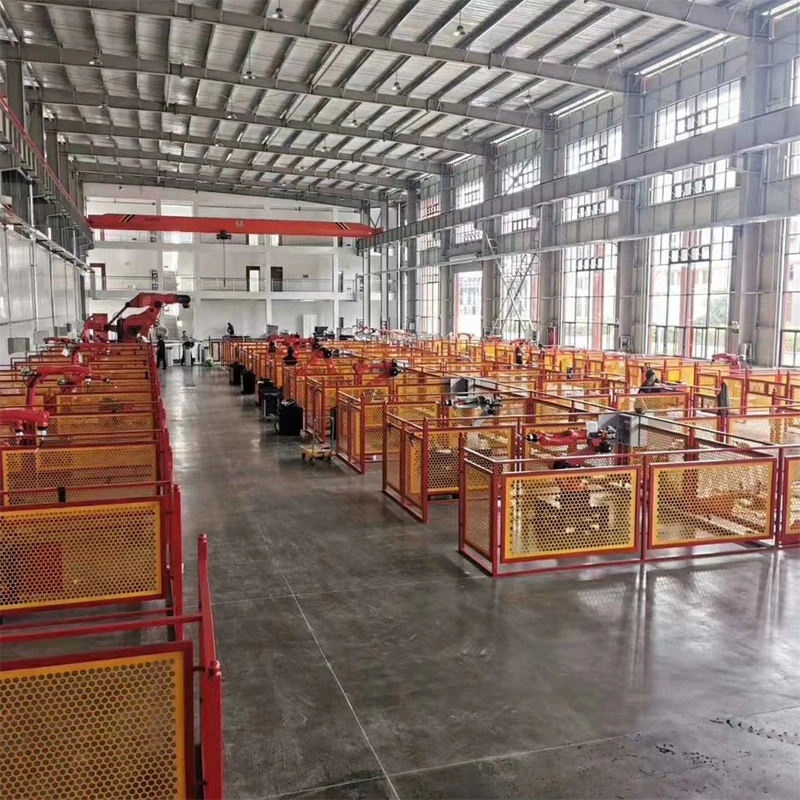
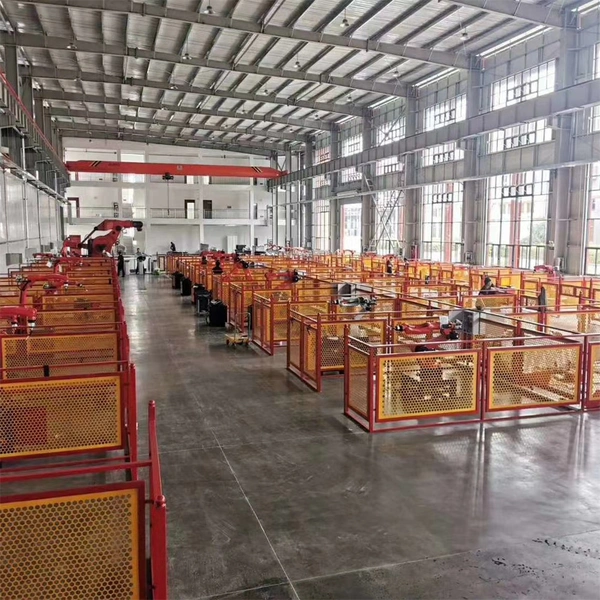
Industrial robots have now penetrated almost all manufacturing industries. The core is: to replace humans in performing repetitive, dangerous, and high-precision tasks.
1. The most mainstream applications
1.1 Handling, loading and unloading
1.1.1 Automatic material pickup and placement for machine tools, injection molding machines, stamping machines
1.1.2 Material transfer in warehouses and production lines
1.2 Welding
1.2.1 Spot welding and arc welding of car bodies
1.2.2 Welding of steel structures, construction machinery, and pipes
1.3 Assembly
1.3.1 Screw fastening, bearing installation, component assembly
1.3.2 Assembly of 3C electronics, home appliances, and automotive components
1.4 Grinding, polishing, deburring
1.4.1 Processing of hardware, bathroom fittings, die-cast parts, aluminum alloy parts
1.4.2 Replacing manual labor, reducing dust-related harm
1.5 Spraying, coating
1.5.1 Painting for cars, home appliances, furniture
1.5.2 Explosion-proof, uniform, paint-saving
1.6 Palletizing, packing
1.6.1 Automatic stacking of cartons, bags, and barrels
1.6.2 Commonly used in food, beverages, chemicals, logistics
1.7 Inspection, sorting
1.7.1 Vision robots: appearance inspection, dimension measurement, sorting defective products
1.7.2 Widely used in electronics, food, pharmaceutical industries
1.8 Cutting, processing
1.8.1 Laser cutting, water cutting, trimming gates, drilling
1.8.2 Automobile, sheet metal, rubber and plastic processing
2. Main application industries
2.1 Automotive manufacturing, the largest user: spot welding, arc welding, assembly, spraying
2.2 3C electronics, mobile phones, computers: assembly, inspection, glue dispensing
2.3 Construction machinery, excavators, cranes: welding, grinding
2.4 Hardware and home appliances, air conditioners, refrigerators, kitchenware: welding, assembly
2.5 Food and pharmaceuticals: sorting, packing, palletizing
2.6 Logistics and warehousing: pallet dismantling, loading and unloading
2.7 Rail transit, ships, steel structures: welding, cutting
3. Benefits of using robots
3.1 Stable quality and high consistency
3.2 24-hour non-stop operation, high efficiency
3.3 Reduce work injuries and occupational diseases, welding fumes, grinding dust, high temperatures
3.4 Lower labor costs, suitable for mass production.
Efficiency Enhancement
- 24-hour uninterrupted operation, without fatigue limitations. A single robot can replace 2-3 manual laborers.
- After being introduced to a certain e-commerce warehouse, the daily order processing volume increased from 50,000 items to 120,000 items, resulting in a 140% increase in efficiency.
- The cross-station transfer time for vehicles in the factory was reduced from 15 minutes to 5 minutes, and the production line cycle time increased by 67%.
Cost savings
- The medium-sized warehouse (with 5 robots) saves over 400,000 yuan in labor costs annually. The equipment investment typically recovers its cost within 1-2 years.
- The energy consumption is only 30% of that of traditional forklifts. It supports automatic charging, and can run for 4 hours after a 1-hour charge.
Safety and Accuracy
- The multi-sensor obstacle avoidance system has a response time of ≤ 100ms. When encountering an obstacle, it can complete braking within 0.3 seconds.
- After being applied in an industrial warehouse, the incidence of handling safety accidents decreased to 0.
- The error rate of goods sorting dropped from 0.1% in manual operation to 0.01%, and the damage rate of goods decreased from 2% to below 0.2%.
- The material positioning accuracy of the new Ren aluminum foil robot mother-child vehicle is controlled within an error of 5mm.
Flexibility and Intelligence
- Robots can form a self-organizing network through a local area network and autonomously negotiate path planning and task allocation.
- The system seamlessly integrates, achieving full-process automation of "warehousing - handling - sorting - outloading".
- After being applied by a manufacturing enterprise, the efficiency of material traceability on the production line increased by 80%.